
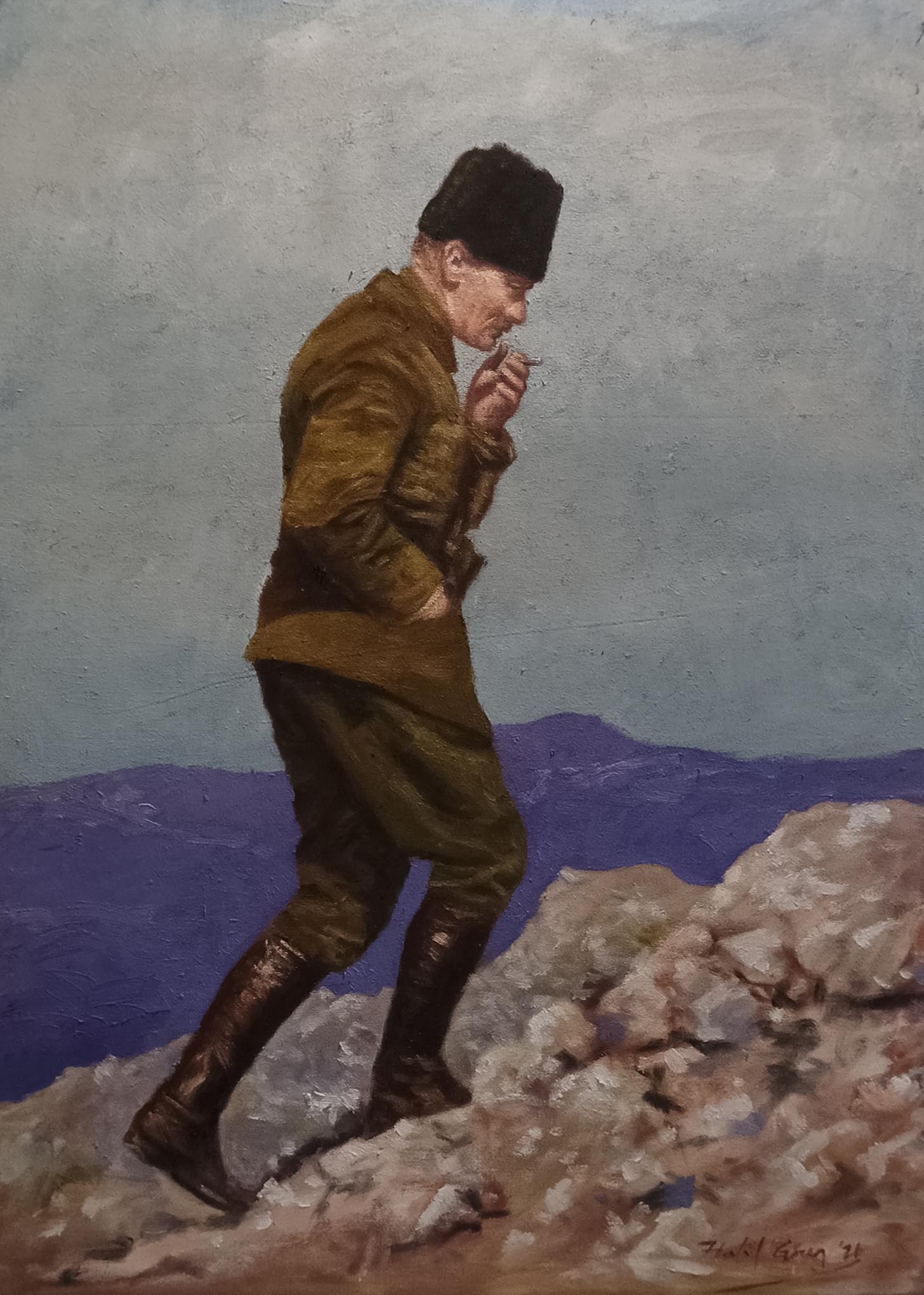
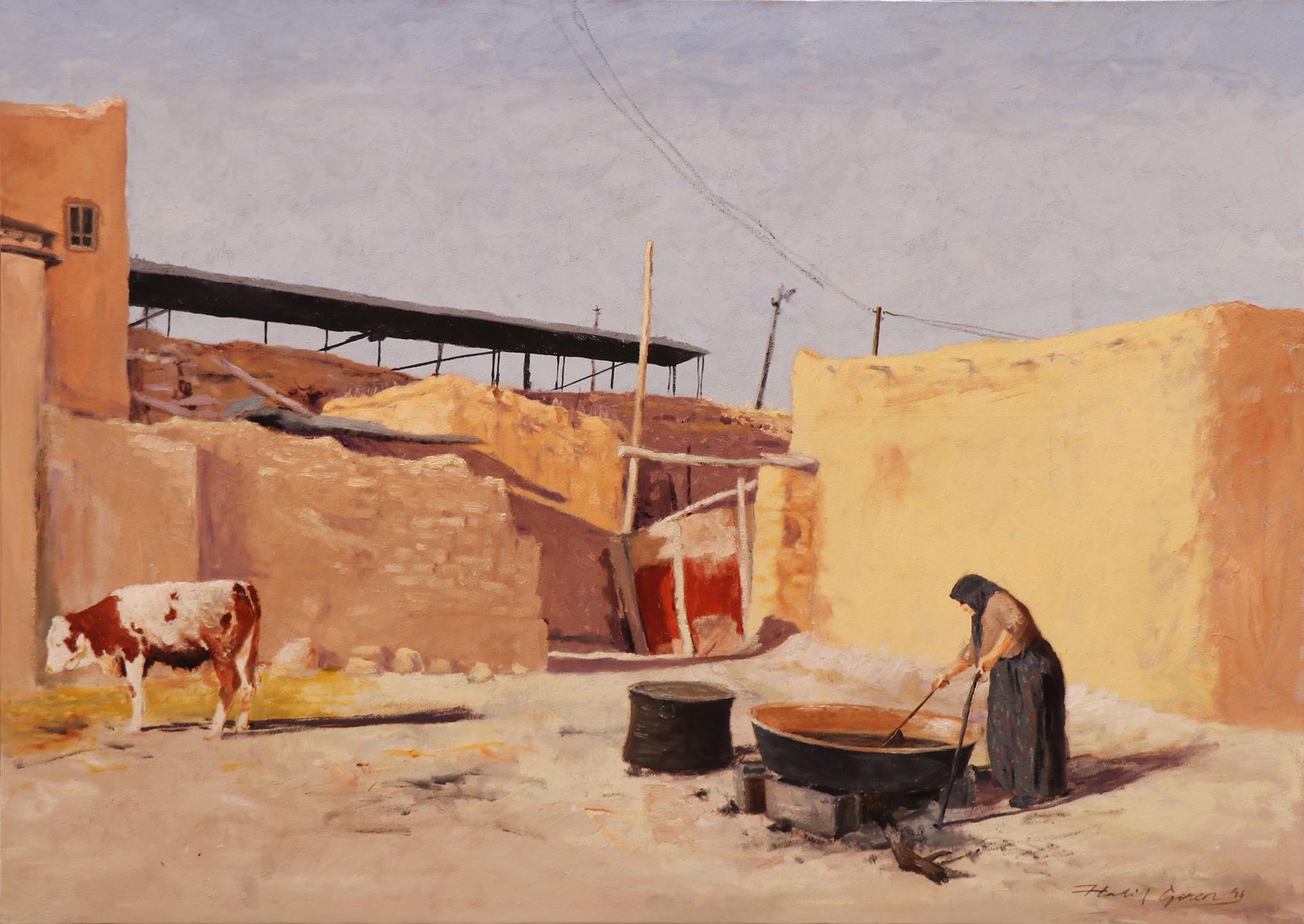
Who is Halil Gören? (1983)He was born in Gaziantep in 1983. He completed his primary, secondary, and high school education in Gaziantep, and attended the Art Education Department at Çukurova University in Adana. After graduating from Cem Demir’s studio in 2006, he worked for a time as an art teacher in both public and private schools. Since 2021, he has been working as a fresco and graffiti artist for the Gaziantep Metropolitan Municipality while simultaneously pursuing his own artistic practice in his private studio.He has held solo exhibitions and participated in group exhibitions in various cities across Turkey, including Adana, Gaziantep, Ankara, Istanbul, Şanlıurfa, Uşak, and Kastamonu.Between 2009 and 2012, he received training in relief work, sculpture, and color theory while apprenticing under sculptor and painter Semih Akdal. In 2018, he began teaching art classes in his own studio. That same year, he received training in the tempera technique from painter Eser Afacan. While continuing to paint using the tempera technique, he shifted his focus toward compositions centered on texture and the interplay of light and shadow.It was during this period that he began to focus on compositions inspired by the Gaziantep (Barak) region. In his paintings, he primarily explores the fading traces of the past, focusing on people and—in particular—the unique architectural structures native to the region. He strives to commemorate, re-evaluate, recall, and document the era of his childhood through the spaces he constructs in his work. He has conducted extensive research in this context, reconstructing elements that have lost their contemporary relevance by re-examining the reasons for their original existence. At the same time, he is actively engaged in creating figurative paintings. She particularly enjoys portraiture and strives to hone her skills in this field. In her view, portraiture is an aspect of the art of painting that is not fully understood. The endeavor to discover organic textures through the use of color brings her immense joy; she considers it a challenging yet wonderfully rewarding practice.He finds it problematic that our collective memory is fragmented into short intervals and shifts rapidly, leading to alienation in human relationships. To his, this “memory” consists of the traces left upon us by any form of change or transformation. He explores this theme because it plays a significant role in shaping her own identity. For instance, a teacher in a one-room village school—deeply devoted to the Republic—encouraging and supporting a student to paint forms a part of this memory.He maintains that anyone aspiring to be an artist must possess a unique mode of expression. The art of painting offers distinctive avenues for an artist to reveal and articulate the emotions they wish to convey. Although this path is long and demands patience, it is a journey that must be undertaken; indeed, the goal is to forge one's own artistic language—it is the process itself that matters, a realization she came to over time. Every thought we devote to painting contributes to our personal growth. All such reflections and actions serve as building blocks in the formation of our art. The true focus should not be on stepping back to admire a finished wall, but rather on deliberating over the placement of each stone while the wall is being built; the former represents the result, while the latter represents the process. Art is, at its core, a process, for it demands growth.