Süleyman Saim Tekcan (October 6, 1940 – October 18, 2026):
Original Printmaking A Pioneer of His Art, Painter, and Art Educator
His Life:
Süleyman Saim Tekcan was born on October 6, 1940, in Trabzon, and passed away on October 18, 2026, at the age of 86. As a prominent figure in Turkish painting and original printmaking, Tekcan secured a lasting place in Turkey’s artistic landscape through his multifaceted roles as a painter, graphic artist, sculptor, academic, art educator, and museum founder. By integrating his artistic production with technical research, educational endeavors, and institutional initiatives, he became particularly renowned for his contributions to the development of original printmaking in Turkey.
In 1961, Tekcan graduated from the Department of Painting and Crafts at the Ankara Gazi Educational Institute. Following his graduation, he began his teaching career at the Artvin Teacher Training School and completed his military service as a reserve officer in Trabzon between 1962 and 1963. In 1964, he was appointed to the Erzurum Yavuz Selim Teacher Training School, and later served as an assistant principal at Işık High School in Istanbul. Upon returning to Trabzon, he taught painting at the Trabzon Teacher Training School from 1966 to 1968. During this period, he also continued his educational initiatives, co-founding the Gülbahar Kindergarten in Trabzon alongside his wife, Emel Tekcan.
One of the notable aspects of Tekcan’s life was his connection to cinema. He appeared in the film *Sevmek Zamanı* (Time to Love), directed by Metin Erksan; however, he did not pursue a long-term career in cinema, choosing instead to refocus his efforts on painting and art education. This experience serves as a biographical detail that highlights the artist’s multifaceted personality and his ability to engage with various artistic disciplines.
Between 1968 and 1975, Tekcan worked at the Istanbul Atatürk Educational Institute, where he carried out significant initiatives for the development of original printmaking. By spearheading the establishment of workshops for engraving, lithography, and serigraphy, he strengthened the role of printmaking within art education. In 1970–1971, he conducted research on original printmaking techniques and education in Germany, subsequently incorporating the experience he gained into his workshop practices in Turkey. During the 1974–1975 period, he also contributed to the establishment of a printmaking workshop and its educational activities at Istanbul Technical University.
The founding of his first private printmaking workshop in Kadıköy in 1974 marked a major turning point in Tekcan’s artistic career. Initially created to produce his own work, the workshop gradually evolved into a space for production and collaboration where other artists could also pursue their own original printmaking projects. The workshop relocated to Söğütlüçeşme in 1977, and on October 13, 1984, the Artess Çamlıca Art House was opened. With its technical equipment, print archive, galleries, and library, this center became a vital hub that contributed significantly to the advancement of original printmaking in Turkey. In 1975, Tekcan joined the faculty of the Istanbul State Academy of Fine Arts, where he established the serigraphy (screen printing) workshop within the Department of Graphics and continued his academic pursuits. He attained the rank of professor in 1985 and was appointed Head of the Department of Graphics that same year. Between 1994 and 1995, he served as the Dean of the Faculty of Fine Arts and Head of the Department of Graphics at Mimar Sinan University.
Committed to the expansion of art education, Tekcan contributed to the development of Anatolian Fine Arts High Schools. In 1996, he played a pivotal role in the establishment of the Faculty of Fine Arts at Yeditepe University, serving as its founding dean. In 2007, he contributed to the founding of the Faculty of Fine Arts at Işık University, where he also served as dean. Throughout his academic career, he mentored numerous artists and placed great emphasis on the practical instruction of original printmaking techniques.
The founding of the Istanbul Museum of Graphic Arts (IMOGA) in 2004 stands as one of the most significant institutional contributions Tekcan made to the Turkish art landscape. The museum was established to facilitate the production, documentation, archiving, and preservation of original prints, as well as to make these works accessible to the public. In the later stages of his life, Tekcan focused his efforts primarily within the framework of IMOGA, dedicating himself to the preservation of art and ensuring its transmission to future generations.
The passing of Süleyman Saim Tekcan on October 18, 2026, was deeply felt as a significant loss to the Turkish art world. He left behind not only an extensive body of paintings and prints, but also the artists he mentored, the studios he established, his academic work, and a lasting institution like IMOGA.
Artistic Philosophy;
At the core of Süleyman Saim Tekcan’s artistic philosophy lie figurative expression, formal exploration, technical experimentation, and the interpretation of cultural memory through the language of contemporary art. Rather than establishing a rigid boundary between painting and original printmaking, the artist views the possibilities of both fields as mutually enriching creative tools. In his work, line, surface, color, and printmaking techniques are not merely formal elements; they are fundamental components that define the character of a figure, the rhythm of a composition, and its underlying cultural connotations.
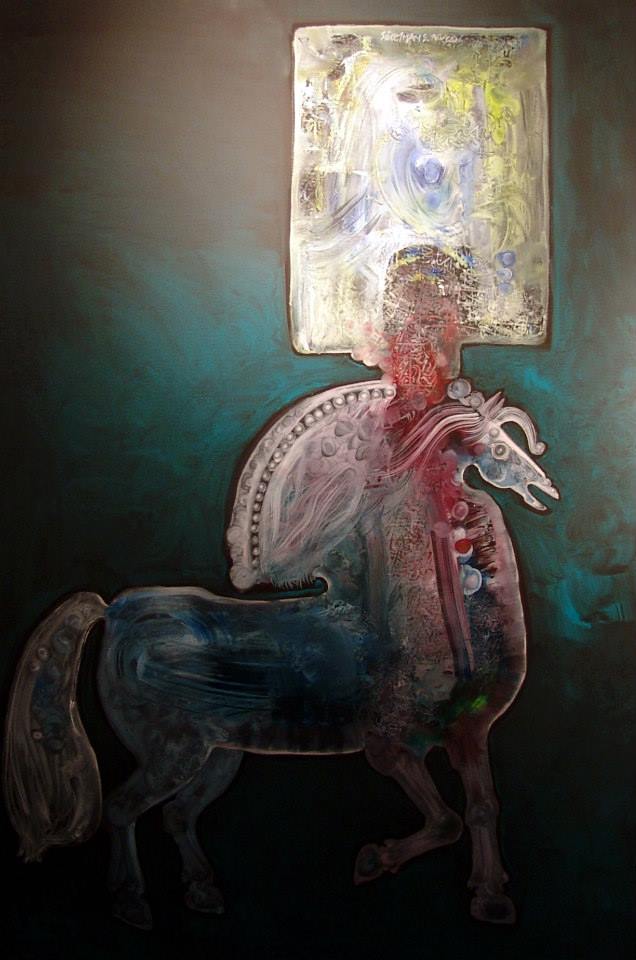
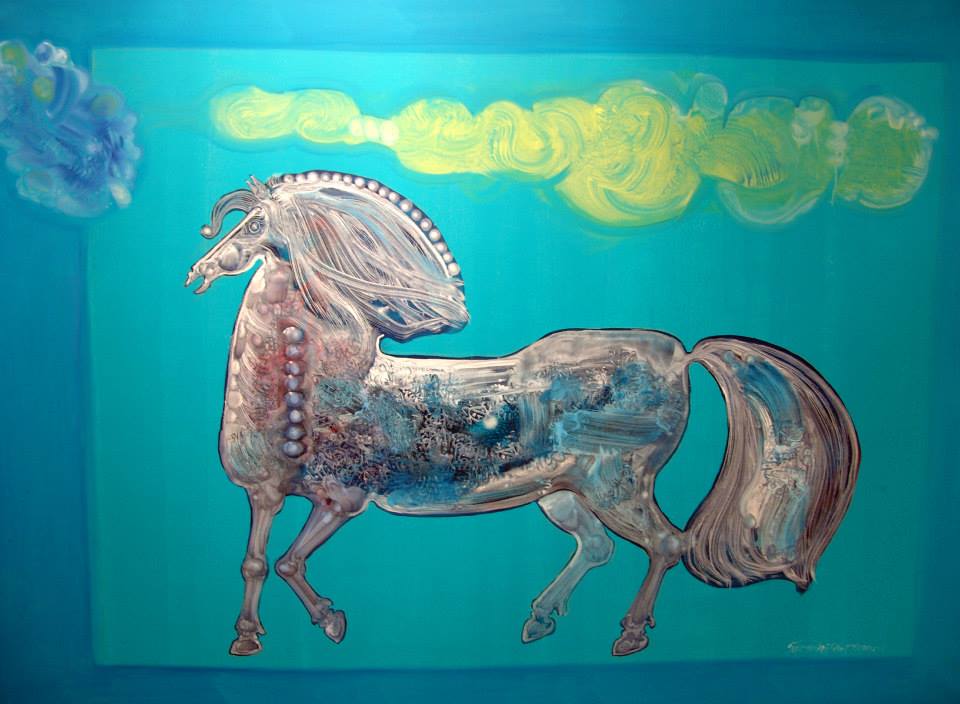
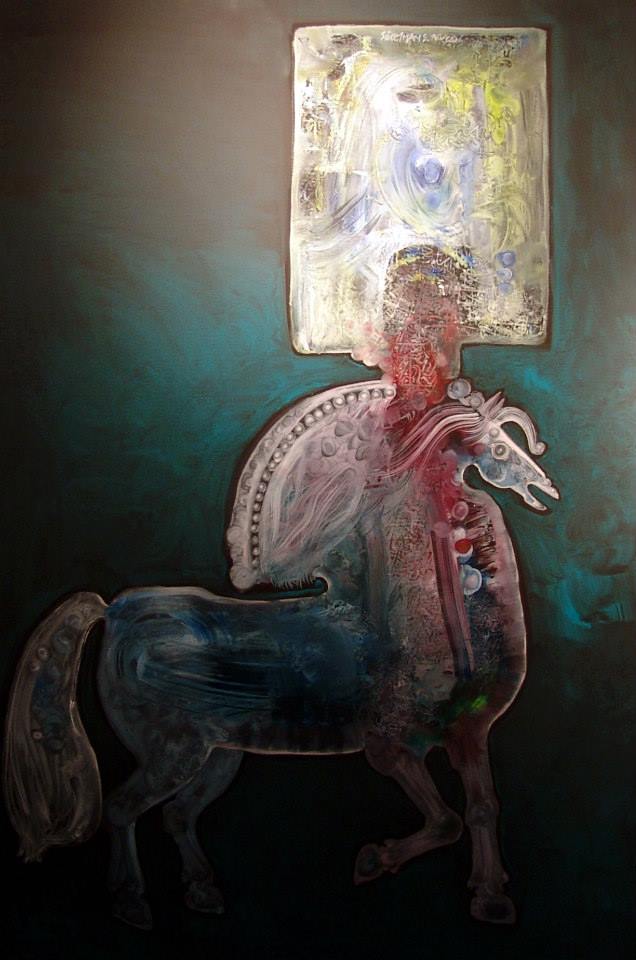
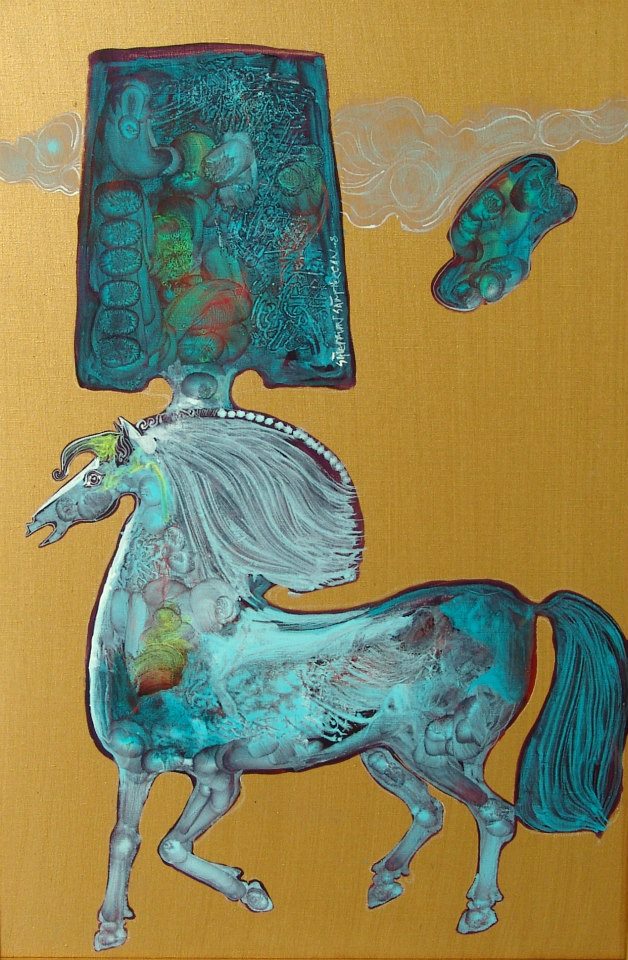
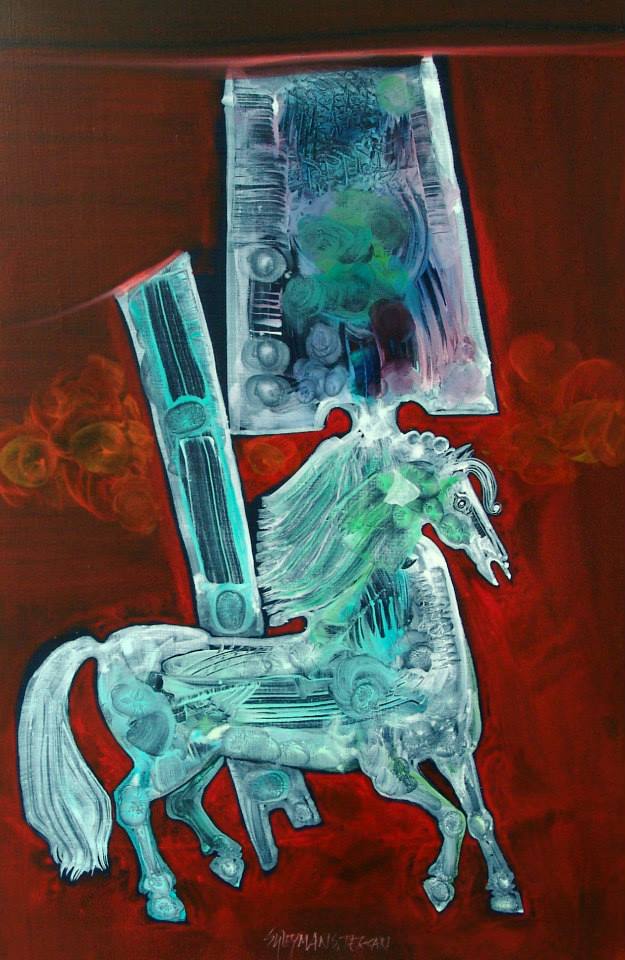
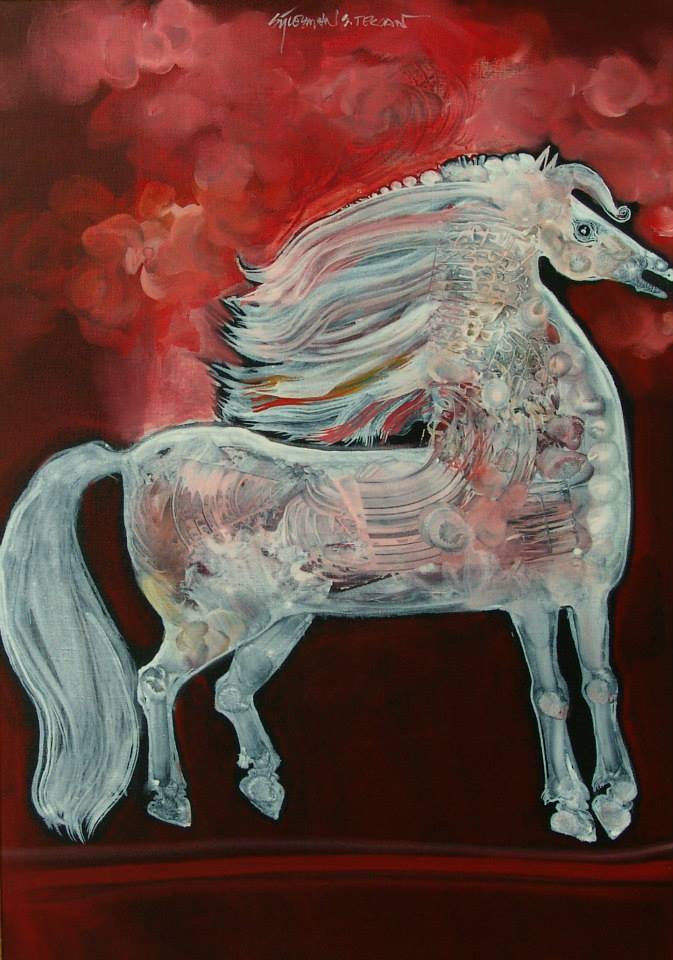
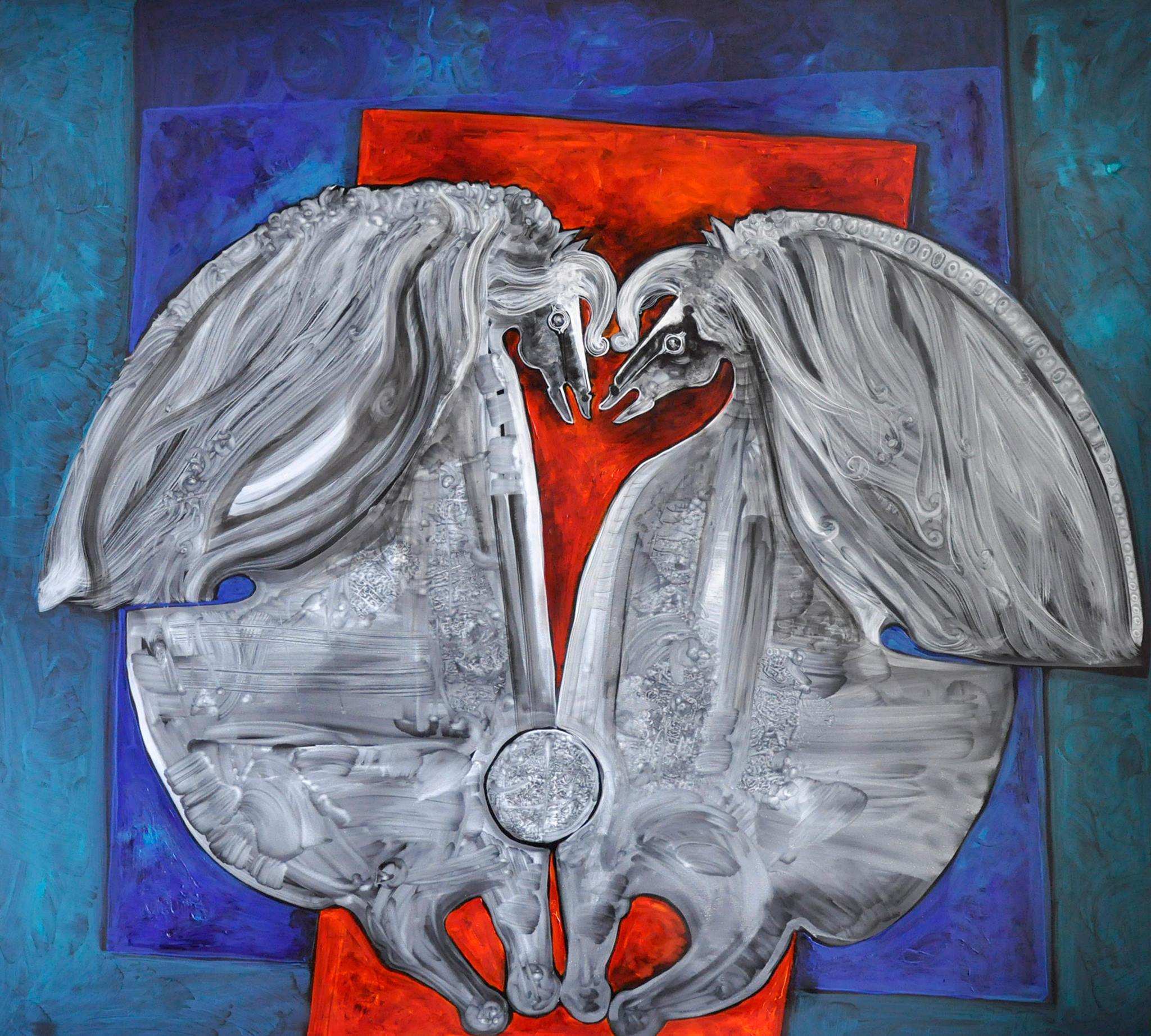
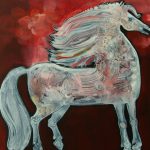
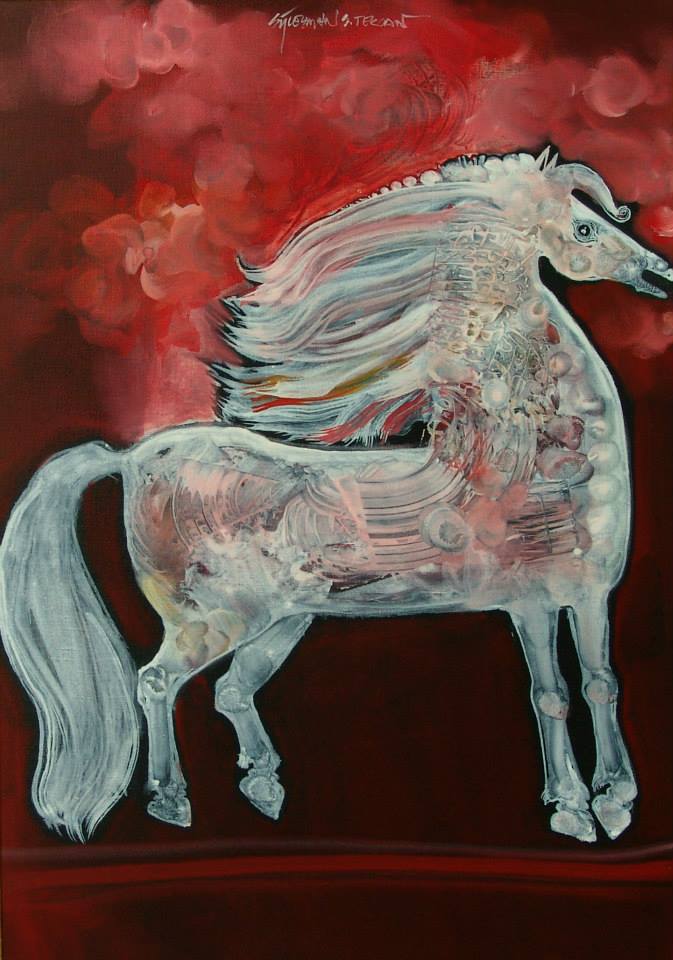
Tekcan’s early work is characterized by a figurative approach rooted in Anatolian life, the folklore of Trabzon, and the presence of women and children. In these pieces, local culture and daily life converge with the artist’s personal observations. Over time, the horse emerged as a defining symbol in his body of work. As a motif, the horse is reinterpreted through various techniques, encapsulating layers of meaning such as movement, power, freedom, history, and cultural memory.
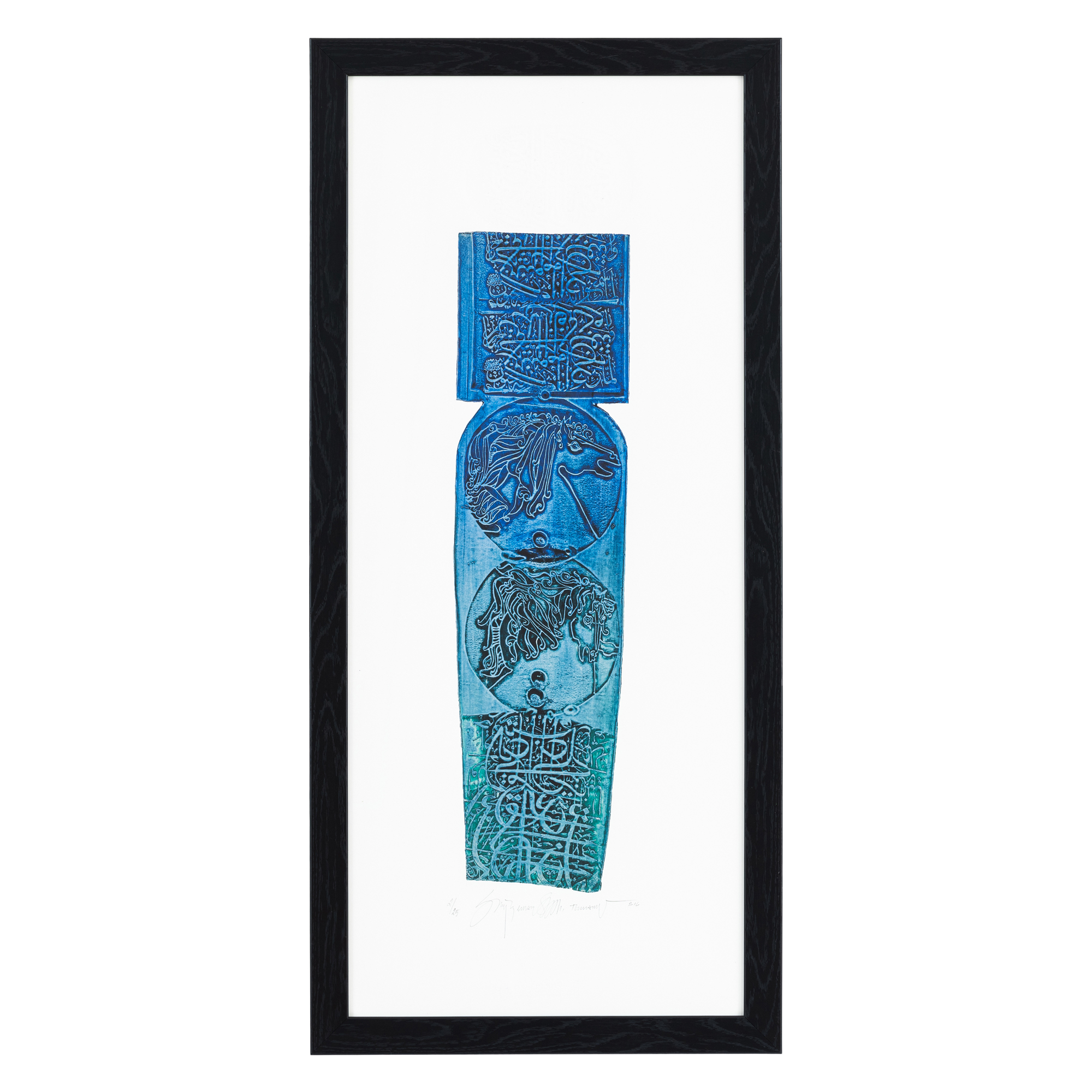
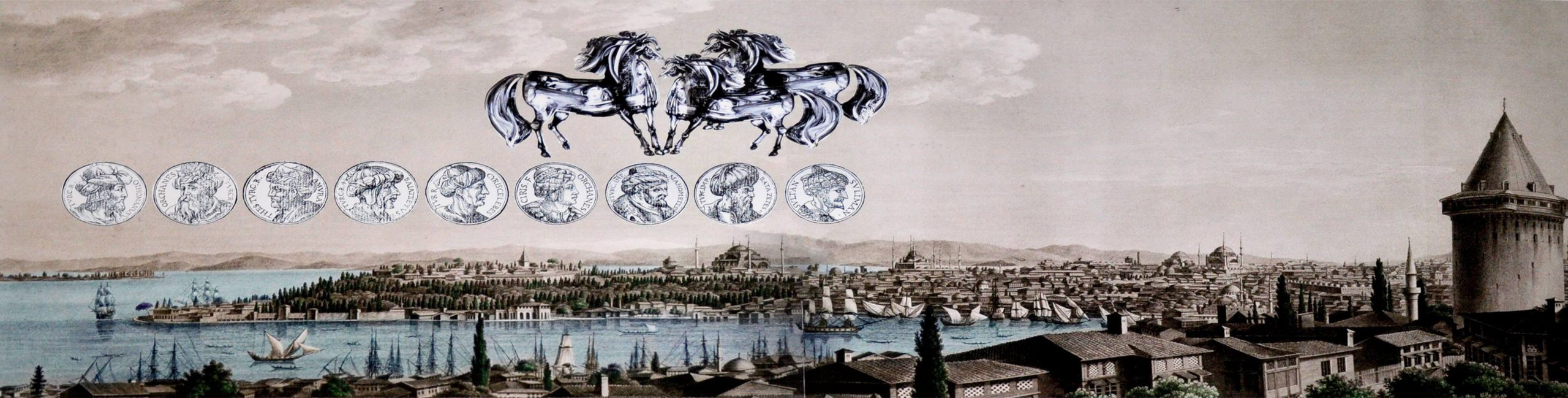
A key aspect of Tekcan’s practice is his engagement with traditional culture through a contemporary visual language. In his compositions—which often incorporate horse figures, Ottoman calligraphy, and historical narratives—a visual dialogue unfolds between the figure, the line, and the script. Rather than simply imitating the formal legacy of the past, Tekcan creates a space where this heritage can be re-examined within the context of contemporary art. His exhibition titled *Horses, Calligraphy, and the Süleymannâme* serves as a prominent example of this approach.
Tekcan’s approach to original printmaking demonstrates that his interest in art extends beyond the final product to the creative process itself. The preparation of printing plates, the arrangement of surfaces, the layering of colors, and the variations that emerge during the printing process are all integral parts of the artist’s formal explorations. Consequently, in their body of work, technical knowledge is not merely a practical skill subordinate to aesthetic decisions; rather, it is one of the fundamental elements that constitute the artist’s visual language.
Themes and Technical Characteristics;
The Horse Figure and Movement
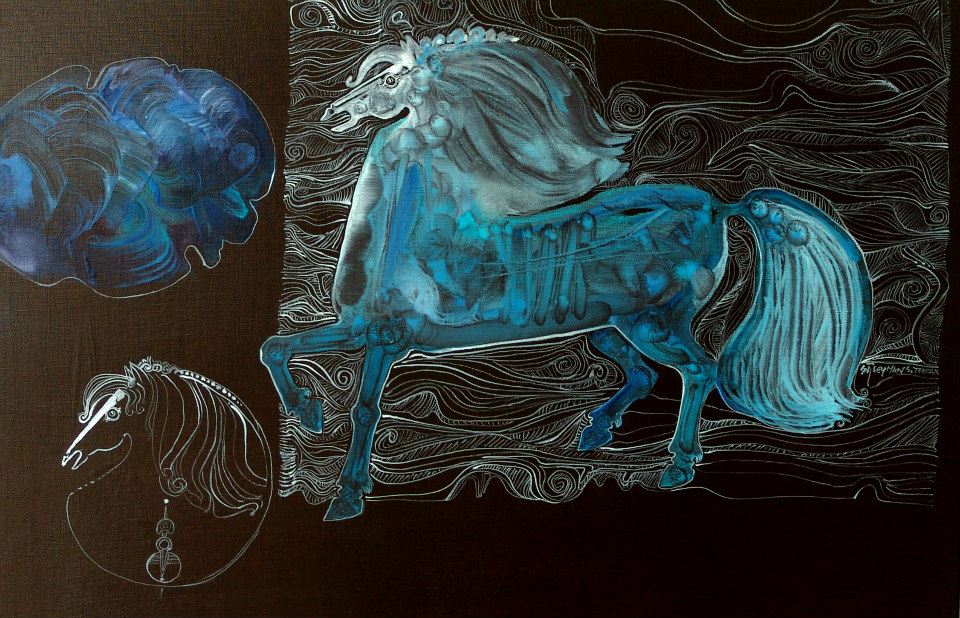
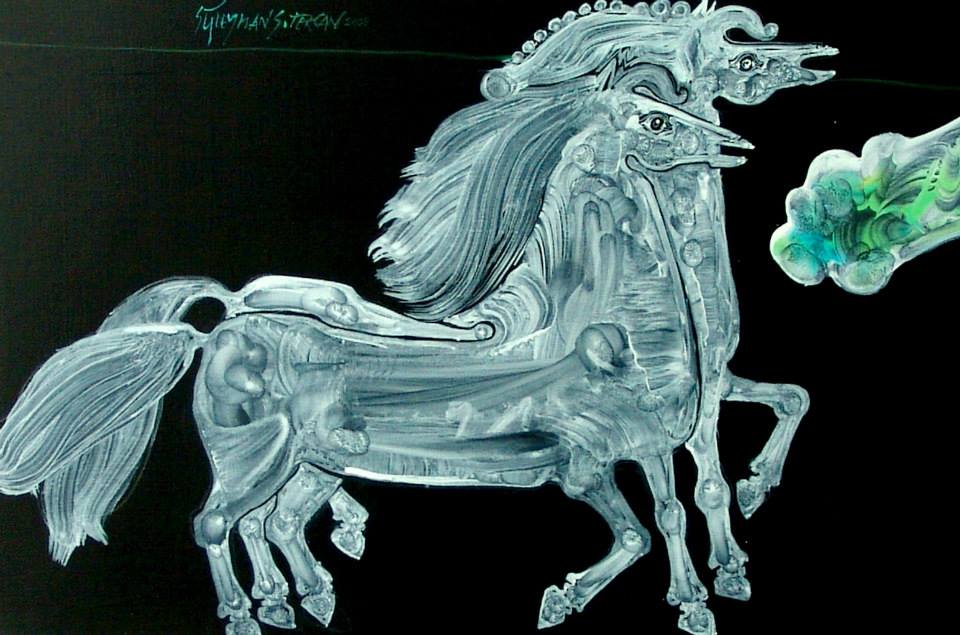
Horses constitute one of the most recognizable groups of works by Tekcan. By approaching the horse figure from various perspectives, the artist explores themes of movement, power, elegance, and rhythm. These figures appear either in isolation or as part of compositions featuring multiple horses. The linear arrangement of their bodies, legs, and heads amplifies the sense of motion, while the repetition of forms creates a rhythmic order across the surface.
In Tekcan’s body of work, the horse figure should not be viewed merely as a depiction of an animal; rather, these figures serve as a symbolic space that opens onto historical and cultural memory. The role of the horse in traditional narratives merges with the artist’s contemporary language of printmaking and painting, imbuing the work with distinct layers of meaning.
Original Printmaking Techniques
One of Tekcan’s significant contributions to art history lies in his development and popularization of original printmaking techniques, achieved through extensive, long-term research. Working with various methods—most notably engraving, serigraphy, and lithography—the artist has integrated these technical possibilities into his own visual vocabulary. The method he developed in the late 1970s, known as "wet-on-wet printing" (*yaş baskı*), stands as one of the most prominent examples of his technical investigations.
Original printmaking offers Tekcan the opportunity to revisit the same composition through different relationships of color, texture, and surface. The controlled yet experimental nature of these printmaking techniques converges with the artist’s figurative approach. Consequently, the figure is not confined to a mere linear contour; ...are reshaped through color fields, surface layers, and the material qualities of the printmaking process.
Line, Color, and Composition
In Tekcan’s works, the line serves not merely to define the outer boundaries of a figure, but as an element that governs the movement within the composition. The bodies, heads, and legs of the horses are interconnected through linear rhythms, while repetitions create a visual flow across the surface. Beyond distinguishing figures from the background, color also establishes the emotional tone of the composition.
In his prints, layered surfaces and the interplay of colors take center stage. In his paintings, meanwhile, paint and line are arranged to emphasize the volume and movement of the figures. These characteristics reveal the connection Tekcan forges between traditional figurative expression and contemporary formal exploration.
Cultural Memory and Tradition
Anatolian culture, historical figures, horses, and the art of calligraphy converge in various ways throughout Tekcan’s body of work. These elements reflect the artist’s endeavor to interpret local cultural sources within a universal visual language. In works where horse motifs are juxtaposed with calligraphy and historical narratives, traditional imagery is reimagined through a contemporary compositional lens.
Major Works and Series
Süleyman Saim Tekcan’s oeuvre encompasses a vast array of original prints, paintings, and sculptures. A significant portion of his work is best understood not through individual titles, but rather through the thematic series and technical investigations he has developed over the years. The following headings identify groups of works and exhibitions that feature prominently in the artist’s body of work:
• Horses Series: Paintings and prints that explore the horse figure through the lenses of movement, power, and cultural memory.
• Bronze Horses: Sculptural works in which the horse figure transitions from the realms of painting and printmaking into three-dimensional expression.
• Atnağme (Horse-Melodies): Engravings that highlight the relationship between the horse figure, line, and rhythm.
• Horses, Calligraphy, and the Süleymannâme: A group of works that establish connections between the horse figure, the art of calligraphy, and historical narratives.
• Wash Drawings (Laviler): Works in which tonal values and the interplay between line and surface are emphasized.
• Cyclical Journey (Döngüsel Seyir): An exhibition title associated with the artist’s explorations of form and visual repetition.
• Anatolian Women and Children: Works from the artist’s early period that focus on local life and figurative expression.
• Still Lifes and Figurative Compositions: Other thematic groups addressed by the artist across various periods using painting and printmaking techniques.
These headings should not be interpreted as individual titles for specific works; rather, they serve to categorize the groups of works and exhibitions found within the artist’s oeuvre. A comprehensive inventory of Tekcan’s works—including their specific titles, dates, and techniques—could be addressed in a separate, dedicated catalogue.
Solo Exhibitions;
Süleyman Saim Tekcan’s exhibition history encompasses not only galleries in Turkey but also international art institutions and art fairs. The list below consists of selected solo and retrospective exhibitions that stand out in the artist’s biography; it is not an exhaustive chronology of all his exhibitions.
• 1984 – “1/1” Original Print Exhibition – Vakko Art Gallery, Ankara.
• 1984 – Oil Painting Exhibition – Garanti Bank Art Gallery, Istanbul.
• 1987 – Original Print and Oil Painting Exhibition – Destek Art Gallery, Istanbul.
• 1988 – “1/1” Print Exhibition – Vakko Art Gallery, Istanbul and İzmir.
• 1990 – Painting and Original Print Exhibition – Garanti Bank Art Gallery, Istanbul.
• 1992 – Solo Exhibition – Armoni Art Gallery, Ankara.
• 1993 – Solo Exhibition – Artisan Art Gallery, Istanbul.
• 1997 – Solo Exhibition – Orkun Ozan Art Gallery, Antalya.
• 1997 – Solo Exhibition – Ayvalık Art Gallery, Ayvalık.
• 1997 – Solo Exhibition – Inge Beckermann Art Gallery, Cologne Art Fair, Germany.
• 1998 – Solo Exhibition – Siyah Beyaz Gallery, Ankara.
• 1998 – Solo Exhibition – Tolga Eti Art Gallery, Istanbul.
• 2000 – Bronze Horses – Galeri Selvin, Ankara. • 2000 – Bronze Horses – Artisan Art Gallery, Istanbul.
• 2000 – White and Black Horses and Monumental Paintings – Siyah Beyaz Gallery, Ankara.
• 2001 – Bronze Horses – İzmir Vakko Art Gallery, İzmir.
• 2002 – Bronze Horses – Kare Art Gallery, Istanbul.
• 2004 – Artist Prints From The Studio Of Master Tekcan – Meridian Foundation, Washington, USA.
• 2005 – Artist Prints From The Studio Of Master Tekcan – National Art Club, New York, USA.
• 2006 – 45th Anniversary Retrospective Exhibition – İşbank Kibele Art Gallery, Istanbul.
• 2007 – Retrospective Exhibition – Gazi University Museum of Painting and Sculpture, Ankara.
• 2008 – Printmaking Retrospective Exhibition – Caddebostan Cultural Center, Istanbul.
• 2011 – 50th Anniversary Retrospective Exhibition – Beşiktaş Çağdaş, Istanbul.
• 2011 – 50th Anniversary Exhibition – FMV Işık Gallery, Istanbul.
• 2011 – 50th Anniversary Exhibition – Arete Art Gallery, Ankara.
• 2013 – Solo Exhibition – Kedi Culture and Art Center, İzmir.
• 2014 – Atnağme (Ode to the Horse) – FMV Işık Gallery, Istanbul.
• 2014 – Atnağme Engravings – Artgalerim, Istanbul.
• 2014 – Retrospective Exhibition – Uludağ University Rectorate Art Gallery, Bursa. • 2015 – *Atnağme* (Horse-Tales) Engravings – Sakarya Metropolitan Municipality Art Gallery, Sakarya.
• 2015 – Horses and Idols: Painting and Sculpture Exhibition – Istanbul Kültür University Art Gallery, Istanbul.
• 2017 – *Laviler* (Wash Drawings) – IMOGA Art Space, Istanbul.
• 2018 – Cyclical Journey – Mimar Sinan Fine Arts University, Tophane-i Amire, Istanbul.
• 2018 – Horses, Lines, and *Süleymannâme* – Theodosius Cistern (Şerefiye Sarnıcı), Istanbul.
Significant Group Exhibitions and Art Events
In addition to his solo exhibitions, Tekcan has participated in international biennials and triennials dedicated to original printmaking. Fostering connections between printmakers and the international art community is a priority for him, both as an artist and as an educator.
• 1986 – Asian Art Biennial – Bangladesh.
• 1986 – Asia-Europe Biennial – Original Printmaking Exhibition, International Event.
• 1987 – Sarajevo Academy of Fine Arts Gallery – Original Printmaking Exhibition, Sarajevo.
• 2008 – 1st International Original Printmaking Biennial – Turkey.
This list does not encompass all of the artist’s international activities, but rather highlights a selection of notable examples.
Awards;
The awards received by Süleyman Saim Tekcan reflect not only his achievements in the art of original printmaking but also his contributions to art education, the development of cultural institutions, and the broader field of the arts. Notable awards and recognitions in the artist’s biography include the following:
• 1982 – Printmaking Award, "Contemporary Artists" exhibition, Association of Painting and Sculpture Museums.
• 1985 – Achievement Award, Viking Paper Industry Printmaking Competition.
• 1986 – Grand Prize in Original Printmaking, Asian Art Biennale, Bangladesh.
• 1986 – Prime Ministry Friendship and Peace Award (Silver Medal), Asia-Europe Biennale.
• 1988 – Original Printmaking Award, State Painting and Sculpture Exhibition.
• 1989 – Founder’s Award, for contributions to the establishment of the Anatolian Fine Arts High School.
• 1992 – Second Prize in Original Printmaking, State Painting Exhibition.
• 1993 – "Artist of the Year" Award, Sanat Kurumu (Art Foundation).
• 2006 – Asia Award, for contributions to the establishment of Marmara University and IMOGA (Istanbul Museum of Graphic Arts).
• 2006 – Vocational Award, Istanbul Rotary Club.
• 2007 – Title of "Artist of the City of Königswinter," Germany.
• 2009 – Institutional Award, IMOGA (Contemporary Arts Foundation).
• 2010 – Award for Contributions to Art and Art Education, Altamira Art Magazine.
• 2011 – Honorary Artist Award, Egeart.
• 2011 – Honorary Artist Award, International Mediterranean Art. • 2022 – Presidential Grand Award for Culture and Arts.
Art Education, Studios, and IMOGA
Süleyman Saim Tekcan’s contribution to Turkish art extends well beyond his own creative output. The studios he established evolved into production hubs where he could share the technical possibilities of printmaking with other artists and facilitate the creation of original prints. This approach aimed to transform printmaking—previously a technique practiced by only a limited number of specialized artists—into a field accessible to a broader artistic community.
Artess Çamlıca Art House emerged as a center where various printmaking methods, such as engraving, serigraphy, and lithography, could be practiced under one roof. Beyond serving as a space for production, it fostered an environment where artists could exchange technical expertise and engage in discussions about art. The fact that artists from different generations have produced prints in Tekcan’s studios underscores the significance of these spaces within the Turkish art scene.
Founded in 2004, IMOGA serves as an institutional continuation of this vision. The museum integrates the functions of collecting, preserving, archiving, documenting, and exhibiting original prints. It also aims to introduce the culture of printmaking to the public and encourage artists to create work using these techniques. In this way, Tekcan’s personal studio initiatives have evolved into a permanent institution dedicated to safeguarding the historical memory of Turkish printmaking.
Collections and Museums Housing His Works
The original prints and other artworks produced by Süleyman Saim Tekcan throughout his career are held in various collections both in Turkey and abroad. The most significant institution directly linked to the artist’s work is the Istanbul Museum of Graphic Arts (IMOGA), which he himself founded. The museum serves as a vital hub for the preservation and documentation of original print artworks.
Key institutions associated with the artist’s body of work and his printmaking archive include:
• IMOGA – Istanbul Museum of Graphic Arts: An institution distinguished by its role in the preservation, documentation, archiving, and exhibition of original print artworks.
• Gazi University Museum of Painting and Sculpture: The institution that hosted a retrospective exhibition of Tekcan’s work in 2007.
• Mimar Sinan Fine Arts University: An institution where the artist served as a faculty member and department head for many years.
• Yeditepe University Faculty of Fine Arts: An institution in whose establishment and early administration the artist played a role.
• Işık University Faculty of Fine Arts: An institution to whose founding he contributed and where he served as dean.
• International Collections: Collections abroad where the artist’s works have been introduced through exhibitions and various art events.
This section identifies institutions directly related to the artist’s educational and exhibition background; it should not be considered an exhaustive inventory of all collections containing his works.
Passing and Legacy;
The passing of Süleyman Saim Tekcan on October 18, 2026, marks the end of a significant era in the Turkish art world. Tekcan did not view the art of original printmaking merely as a field for individual creative production; rather, through his technical research, studio practice, academic roles, and initiatives in museology, he worked toward the institutionalization of this field in Turkey. Beginning in the 1970s, he pioneered the establishment of workshops for engraving, lithography, and serigraphy, enabling artists to create work using high-quality technical resources. The "wet-printing" method he developed—the result of years of extensive research—stands as a clear example of his pursuit of technical innovation.
IMOGA, which he founded in 2004, represents one of the most significant institutional legacies he has left to the art world. Established to preserve, document, and archive original prints—and to bring them before the public—the museum serves as a tangible manifestation of a long-term cultural contribution that transcends the artist’s own personal body of work.
Tekcan’s legacy will endure through his own creations, the artists he mentored, his contributions to art education, and the institutional infrastructure he built for the art of original printmaking. His place in art history is defined not only by the works he produced but also by the resources he developed for the creation, instruction, preservation, and transmission of art to future generations in Turkey.
His Place in the History of Turkish Painting;
Süleyman Saim Tekcan is a significant figure in the development of Turkish painting and original printmaking, embodying the roles of artist, academic, technical researcher, and institution founder. His historical importance is not defined solely by his paintings and prints—notably those featuring horses—but also by his extensive efforts in researching, teaching, and promoting printmaking techniques, as well as preserving such works through permanent collections.
Tekcan has contributed to strengthening the role of techniques like engraving, serigraphy, and lithography within art education, establishing production facilities both at universities and in private studios. The studio system he developed, particularly from the 1970s onward, facilitated artists' access to technical knowledge and equipment, transforming original printmaking into a creative field accessible to artists across different generations.
The artist’s persistent exploration of the horse motif—through diverse technical and formal approaches—has enabled the development of a distinct, personal visual language. The interplay he creates between horses, calligraphic lines, and historical imagery reflects an approach that engages with cultural memory through the lens of contemporary art. This serves as a prime example of how local sources can be reinterpreted within the universal language of art.
Furthermore, the establishment of IMOGA (Istanbul Museum of Graphic Arts) ensures that Tekcan’s significance in art history extends well beyond his individual body of work. As an institution dedicated to preserving original prints and maintaining an archive of the history of Turkish printmaking, the museum stands as a tangible outcome of the artist’s lifelong endeavors. In this respect, Tekcan should be regarded as an artist who not only contributed to the artistic production of his own generation but also strove to improve the conditions for creative work for subsequent generations.
General Assessment:
Süleyman Saim Tekcan’s artistic career represents a long-standing creative process that encompasses the technical, aesthetic, and institutional dimensions of painting and original printmaking. His body of work is remarkably broad, ranging from figurative pieces inspired by life in Anatolia—including his extensive series centered on the motif of the horse—to his rigorous research into printmaking techniques and his significant contributions to academic education.
In his art, line, color, movement, and figure converge to form a visual language where traditional culture meets contemporary formal exploration. Beyond this artistic expression, his technical endeavors in the field of original printmaking and the workshops he established have played a pivotal role in the development of printmaking in Turkey.
With the founding of IMOGA, the artist’s personal experience evolved into a permanent institution dedicated to the preservation of artworks and their presentation to the public. Although Süleyman Saim Tekcan passed away on October 18, 2026, he will continue to live on in the history of art through his body of work, the artists he mentored, and the institutional legacy he bequeathed to the art of original printmaking in Turkey.
-

- Süleyman Saim Tekcan

-
- Süleyman Saim Tekcan
-
- Süleyman Saim Tekcan
-
- Süleyman Saim Tekcan
-
- Süleyman Saim Tekcan
-
- Süleyman Saim Tekcan
-
- Süleyman Saim Tekcan
-

- Süleyman Saim Tekcan
-

- Süleyman Saim Tekcan

-
- Süleyman Saim Tekcan
-

- Süleyman Saim Tekcan
-
- Süleyman Saim Tekcan
-
- Süleyman Saim Tekcan
-
- Süleyman Saim Tekcan

-
- Süleyman Saim Tekcan