


Who was Semiha Berksoy? (1910-2004)
Semiha Berksoy was a Turkish opera singer, actress, and painter. She was one of Türkiye’s first internationally recognized artists and a symbol of the Republican era’s art scene.
She appeared in the first Turkish sound film and the first Turkish opera staged by order of Mustafa Kemal Atatürk, performing in the first stagings of major opera works at the Ankara State Opera and Ballet. In 1939, she became the first Turkish opera singer to perform in Western Europe, playing the lead role in Richard Strauss’s “Ariadne auf Naxos” in Berlin.
She was also always closely involved with visual arts and participated in important international exhibitions with her works. Berksoy is known as the “woman of firsts” for achieving many firsts in various fields of art.
She was born in 1910 in the Çengelköy district of Istanbul. Her mother was the sculptor and painter Fatma Saime Hanım, and her father was the finance clerk and poet Ziya Cenap Berksoy. She inherited her interest in art from her parents. At the age of eight, she lost her mother to the Spanish flu. For a time, she lived with her uncle, Basri Cenap Bey, who was then the chief clerk at the Ottoman Public Debt Administration. After her father remarried, the family moved first to Sultanahmet and then to Kadıköy. She completed her primary and secondary education at Kadıköy Primary School. The presence of the Kuşdili Theatre across from their house in Kadıköy influenced her artistic inclination. She began writing her first stories while still in primary school. In 1928, she took lessons from a vocal coach in Beyoğlu.
She began her high school education at Istanbul Girls’ High School. During those years, with the reorganization of Darülelhan and the establishment of the Istanbul Conservatory, she studied vocal performance with Nimet Vahit Hanım. In 1929, she gave her first public concert. In this concert, where she performed various arias from Nikolay Rimsky-Korsakov’s opera Sadko, she was accompanied by Cemal Reşit Rey. During the same period, he passed the entrance exams for the Academy of Fine Arts and studied sculpture with Refik Epikman and ceramics with İsmail Hakkı Oygar at the Namık İsmail Workshop; however, he took a break from painting until 1957 to focus on performing arts.
His painting career and later years:
Berksoy devoted considerable time to painting in the 1960s. In 1961, he participated in the State Painting and Sculpture Exhibition at the Ankara Faculty of Language, History and Geography with his paintings "The House Where Fatih Was Born in Bursa" and "The Green Mosque," receiving an award. He exhibited his paintings at the Lutzovhaus painting exhibition in Berlin in 1969 and in Paris in 1972.
He held his first painting exhibition in Türkiye at the Ankara State Painting and Sculpture Gallery in 1974. After losing his wife, Ercüment Siyavuşgil, in 1975, he withdrew into seclusion for ten years. One day, the artist, who worked to produce the note C in order to overcome his fear of old age and death and said, "I produced the note C, I conquered death," returned to painting, singing, and writing his memoirs. He opened an exhibition in the Grand Hall of the Atatürk Cultural Center in 1982. In 1984, the 50th anniversary of Turkish women gaining the right to vote and be elected, Berksoy was awarded the "Atatürk Opera Award" by the Turkish Grand National Assembly Presidency with the title of "First Female Opera Artist". Her paintings were exhibited in Leningrad and Moscow in 1985 with the support of Mesut İktu, the director of the Istanbul State Opera and Ballet.
In 1992, she painted extensively and held an exhibition at the Cemal Reşit Rey Concert Hall (1992). Living in the Pamir Apartment in the Ayaspaşa district, Berksoy began decorating a room in this apartment in 1993 with objects that had stories. She placed objects meaningful to her (photographs, letters, clothes, paintings...) in this room. "Semiha Berksoy's Room" was included in the permanent collection of the Mimar Sinan University Painting and Sculpture Museum.
In 1995, Berksoy was in New York and Hann Munden, Germany. She participated in the international exhibition "All Fann- Die Kunst" in the city. In 1996, under the direction of Kutluğ Ataman, she realized the project "Kutluğ Ataman’s Semiha b. Unplugged".
This project was a video installation about Berksoy's life and her perception of life. In the 6.5-hour video, Berksoy interpreted and narrated her life in a room in her own home. Berksoy's paintings and the video were included in the Istanbul Biennial in 1997, whose main theme was "Life, Beauty, Translations/Transfers and other Difficulties". Subsequently, the video was shown in cities such as Milan, Berlin, Luxembourg, and Montreal, and received great interest.
In 2000, she participated in the "Zeitwenden 2000 Millenium" exhibition, which brought together the most important artists of the century, at the "Kunst Museum Bonn" in Vienna, becoming the first Turkish painter to participate in this exhibition. She was honored with first prize for her work titled "Semiha Berksoy Room". In 2003, she exhibited her recent paintings at the "Blut-Honig" exhibition held at the Samlung Essel Modern Museum in Vienna. She opened the "Semiha Berksoy Retrospective Exhibition" at the İş Sanat Kibele Art Gallery. Berksoy gifted her portrait of Wagner to the Bayreuth Festival in 2004. The artist died on August 15, 2004, at the age of 94. She was buried in Istanbul.
-

- Semiha Berksoy

-

- Semiha Berksoy

-

- Semiha Berksoy

-

- Semiha Berksoy

-

- Semiha Berksoy

-

- Semiha Berksoy

-

- Semiha Berksoy

-

- Semiha Berksoy

-

- Semiha Berksoy

-

- Semiha Berksoy

-

- Semiha Berksoy

-

- Semiha Berksoy

-

- Semiha Berksoy

-

- Semiha Berksoy

-

- Semiha Berksoy

-

- Semiha Berksoy

-

- Semiha Berksoy

-
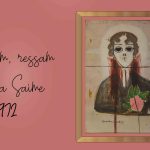
- Semiha Berksoy

-

- Semiha Berksoy

-

- Semiha Berksoy

-

- Semiha Berksoy

-

- Semiha Berksoy
