


Who was Sadık Göktuna? (1876 – 1951)
One of the groups of artists who played a significant role in the development of Turkish painting during the period from the late Ottoman Empire to the early years of the Republic was the generation of military painters. Painting lessons, alongside technical training in military schools, held an important place, and many officers who graduated from these schools contributed to art history as painters. Artists within this generation both continued their military duties and contributed to the development of Turkish painting with their nature-observation-based paintings. Sadık Göktuna, one of these artists, is a military painter who stands out particularly for his mastery of watercolor and oil painting techniques and his artistic approach that continued the Hoca Ali Rıza school.
His Life:
Sadık Göktuna was born in Vidin in 1876. His father was Cafer Bey. He received his military education at the Military Academy in Istanbul. His talent in painting was noticeable even during his student years. In 1895, his work “New Thermal Springs in Bursa,” created at the Military Academy, was appreciated by Hoca Ali Rıza and the school administration and presented as a gift to the palace. After graduating from the Military Academy in 1896, Göktuna began his military service. Sadık Göktuna passed away in Ankara in 1951.
Military Career:
Throughout his military career, Sadık Göktuna served in important military processes of both the Ottoman Empire and the Republic of Turkey. He participated in the Cretan Rebellion of 1897 and was promoted to lieutenant for his outstanding service. Serving in various regions of Anatolia, he was elected to the General Staff Cartography Commission in 1909 with the rank of captain. He participated in the Balkan Wars in 1912 and served in World War I in 1914 with the rank of major. He later participated in the Turkish War of Independence and continued his military service. He was promoted to lieutenant colonel in 1925. He played an important role in the establishment of the General Directorate of Cartography, then known as the General Directorate of Cartography, and after serving in various units, he retired voluntarily in 1933 with the rank of colonel. Awards and Decorations Received:
Sadık Göktuna was awarded numerous decorations and medals during his military service. These include the Industrial Medal, the Greek War Medal, the 4th Class Mecidi Order, the Industrial Honor Medal, the War Medal, and the Independence Medal.
Artistic Life:
After retirement, he continued his painting work in Ankara. He was one of the artists who participated in the "Homeland Tours" program organized during the Republican era to spread art to Anatolia. He went to Tokat as part of the 4th Homeland Tour in 1941. During this period, he served as a board member of the Fine Arts Branch of the Ankara People's House. He was the founding member and first president of the Military Painters Association, which he helped establish in 1944 and which was founded in 1945.
Artistic Approach:
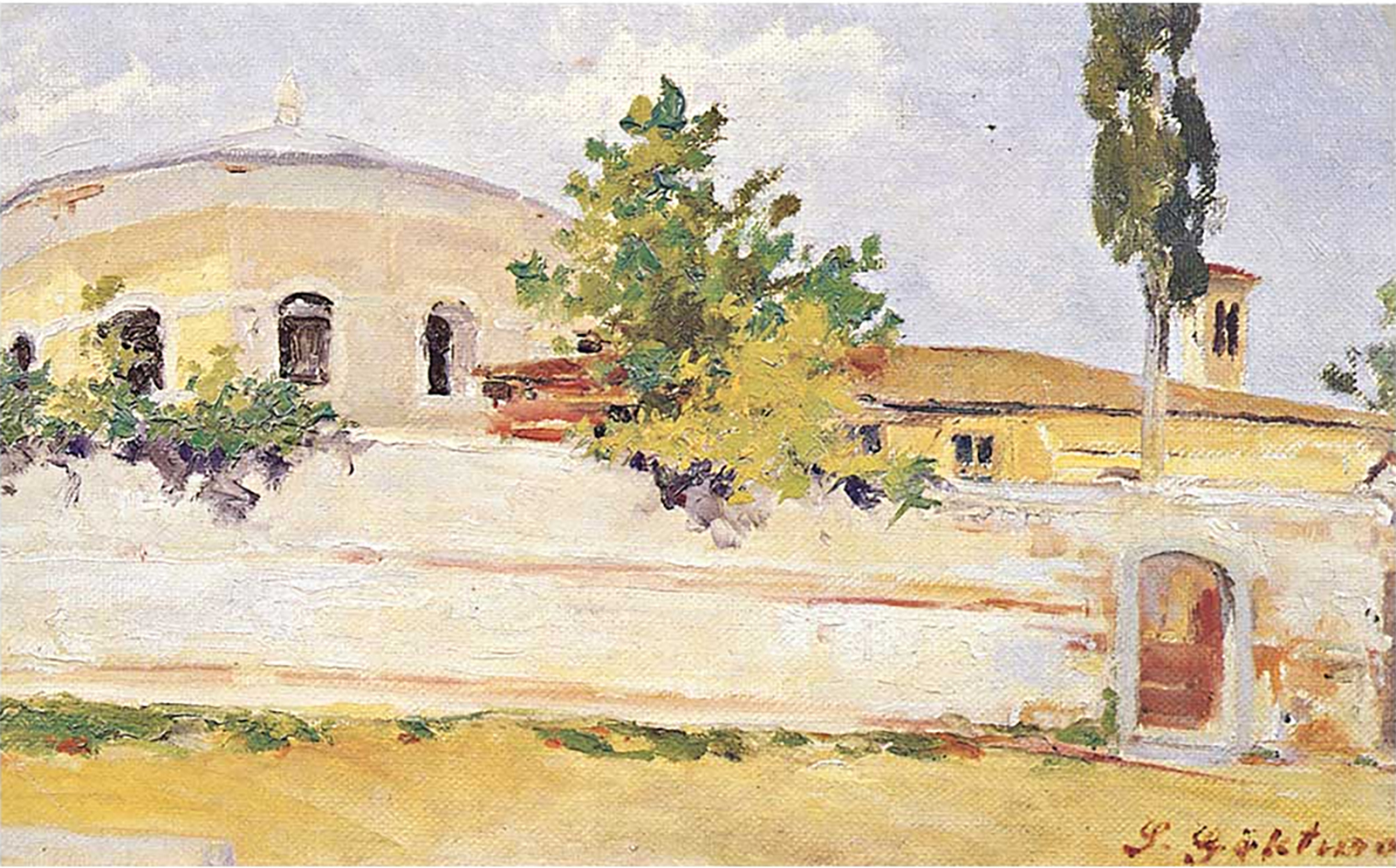
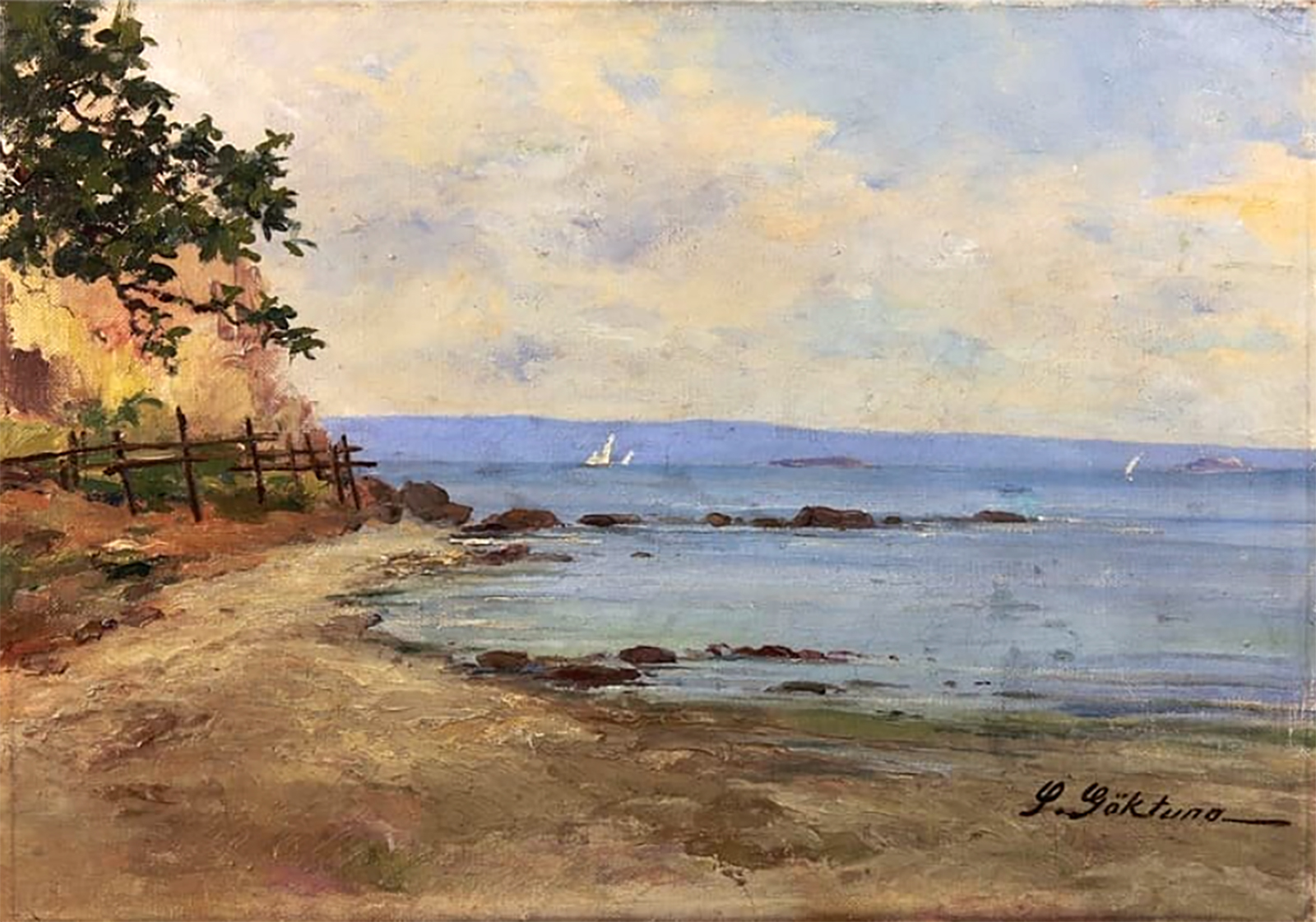
Sadık Göktuna produced successful works in both watercolor and oil painting techniques. He possessed an effective style, particularly in watercolor, that is difficult to achieve. His artistic approach is largely based on the Hoca Ali Rıza school. The fundamental characteristics of this school, such as direct observation of nature, the use of clear and clean colors, and fine and sensitive brushwork, are clearly visible in Göktuna's works. His paintings carry a delicate, emotional, and lyrical atmosphere. The colors are bright, luminous, and especially clean. His still lifes are technically quite successful and are considered to be at a level comparable to the works of European painter Emil Klein.
Chronology of Works:
Sadık Göktuna's artistic production can generally be evaluated within three periods:
1895–1910: Works he produced during his years at the Military Academy and his early military service.
1910–1933: Landscapes he created in various regions of Anatolia during his military service.
1933–1951: Mature works he produced in Ankara during his retirement.
Known Works;
Some of the artist's known works include: Yeni Kaplıca in Bursa (1895), various Anatolian landscapes, watercolor landscapes, and still life studies. A significant portion of his works are in private collections.
His Position in Turkish Painting History;
Sadık Göktuna is one of the important representatives of the military painter tradition that emerged in the period extending from the Ottoman Empire to the Republic. He is among the artists who stand out in Turkish painting, especially due to his mastery of watercolor technique and his successful continuation of the Hoca Ali Rıza school. Furthermore, his role as the founder and first president of the Military Painters Association shows that he played an important role in the institutionalization of military painters.
-

- Sadık Göktuna

-

- Sadık Göktuna

-

- Sadık Göktuna

-

- Sadık Göktuna

-

- Sadık Göktuna
-

- Sadık Göktuna

-

- Sadık Göktuna

-

- Sadık Göktuna

-

- Sadık Göktuna

-

- Sadık Göktuna
-

- Sadık Göktuna

-

- Sadık Göktuna

-

- Sadık Göktuna

-

- Sadık Göktuna

-

- Sadık Göktuna
