


Prof. Dr. Özdemir Altan (1931–2026)
A Pioneer of Avant-Garde, Pop Art, and Postmodern Explorations in Turkish Painting
Life;
Özdemir Altan was born in Giresun in 1931, though his official civil registration was recorded in Konya. As one of the most enduring and experimental figures in contemporary Turkish painting, Altan—whose artistic career spanned over seven decades—developed an artistic philosophy characterized by constant evolution, exploration, and the integration of diverse disciplines, rather than adhering to a single style. News reports published on September 10, 2026, announced that he had passed away at the age of 95; the news of his death was shared by art writer and curator İbrahim Karaoğlu.
Altan’s engagement with painting began during his pre-high school years in Kayseri. Between 1947 and 1949, he attended painting classes conducted by the artist Halit Doral at the Kayseri People’s House (*Halkevi*). The fact that Halit Doral also worked at the Kayseri Archaeology Museum ensured that Altan’s artistic education extended beyond mere painting; the artist also participated in the museum’s inventory work. During this period, he honed his painting skills by copying works by Western artists such as Vincent van Gogh, Paul Cézanne, Pierre-Auguste Renoir, and Paul Gauguin.
In 1956, he graduated from the Painting Department of the Istanbul State Academy of Fine Arts. At the Academy, he studied first under Halil Dikmen and subsequently under Zeki Faik İzer. The training he received in Zeki Faik İzer’s studio, in particular, played a decisive role in shaping Altan’s approach to painting. His research into Italian Primitives, Ingres, and modern European painting laid the foundation for the formal explorations seen in his later works. After graduating, Altan worked independently for a time before returning to his alma mater in 1962 as an assistant. Thus, his identities as an artist and an academic began to develop concurrently. Following Zeki Faik İzer’s retirement, he took over the studio leadership and mentored numerous artists over the years. He rose through the academic ranks to become an associate professor and eventually a full professor, retiring from the academy in 1998. In later years, he also taught at Yeditepe University.
Altan was not merely a painter and academic; he also made a significant impact on the contemporary Turkish art scene through his writings, art criticism, exhibition organization, and curatorial work. The Hüseyin Avni Lifij exhibition he organized at the Academy in 1968 is considered one of the early examples of curatorial practice in Turkey. He organized exhibitions for artists such as Cemal Tollu, Mahmut Cûda, Zeki Faik İzer, and Bedri Rahmi Eyüboğlu, and contributed to the preparation of their exhibition catalogues.
The artist’s engagement with the international art world also began early in his career. He participated in various international exhibitions, most notably the Paris Biennials of 1963 and 1965. His works were exhibited in cities such as Rome, Skopje, Bucharest, Belgrade, Moscow, Paris, Hannover, and London.
Özdemir Altan passed away on September 9, 2026, at the age of 95. He was laid to rest in Bozcaada on September 11, 2026. Thus, while his artistic and educational career spanning nearly seventy years came to an end, he left behind a vast legacy of creative output and intellectual thought in the realm of contemporary Turkish art.
Artistic Approach;
It is impossible to define Özdemir Altan’s art through a single movement or style. Throughout his career, the artist underwent constant evolution regarding form, material, technique, and concept. For him, art was not merely the repetition of a predetermined style, but rather a field of inquiry born from the convergence of diverse sources.
At the core of Altan’s artistic philosophy lies the coming together of differences, contrasts, incongruities, and chance occurrences. He maintained that disparate concepts, origins, structures, and logics could coexist within a single artwork. This approach became increasingly systematic, particularly through the "Chance Encounter" method he developed in the late 1980s.
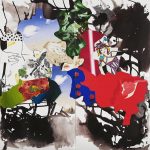
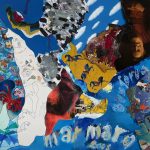
Reflecting this philosophy, Altan’s works often juxtapose traditional painting materials with everyday or industrial objects. His use of metal, rope, leather, fabric, ready-made objects, and various collage elements—alongside canvas and paint—stems from a desire to expand the boundaries of painting.
This is also where the artist’s relationship with Pop Art, avant-garde art, and postmodern thought becomes evident. However, defining Altan solely as a "Pop Art artist" would be incomplete. His art has incorporated figurative painting, expressionism, collage, conceptual approaches, the use of objects, three-dimensionality, and symbolic expression at various stages of his career.
A fundamental idea summarizing Altan’s artistic approach is that while it is inevitable for an artist to reference predecessors, the crucial factor is not the repetition of a method but the resulting outcome. Consequently, Altan appropriated forms from art history and reconstructed them within new contexts.
Themes and Technical Characteristics;
When Özdemir Altan’s artistic career is divided into distinct periods, shifts in style become clearly apparent.
Cubist and Formative Period
Cubist tendencies are prominent in the early period spanning 1948–1956. During this time, the artist created works that fragmented form, examined structure, and treated the object through geometric relationships. Studies of Italian Primitives and Ingres also served as intellectual sources for this period.
Romantic and Expressionist Period
The period extending from 1957 to the mid-1960s is characterized by the dominance of rapid brushstrokes, dynamic color movements, and expressionist qualities. This era marks a process in which Altan moved away from the academic approach to the figure, developing a more personal and emotional pictorial language.
Kings and Queens
The “Kings and Queens” series, which emerged in the mid-1960s, stands as a significant example of Altan’s fantastic and ironic narrative style. Grand figures from classical art history are reimagined within the artist’s personal realm of imagination. The figures here are not so much historical realities as they are dreamlike, symbolic characters.
Cyclops and the Fly King
Mythological and fantastic elements become even more pronounced in the “Cyclops and the Fly King” series. The figures increasingly depart from their natural appearances, transforming into symbolic forms. These works exemplify Altan’s questioning of the relationship between classical and modern art.
Post-March 12 and Realist Period
In the 1970s, the political and social climate of Turkey began to make itself directly felt in Altan’s art. The pain, unrest, and social tension generated by the political atmosphere of the period known as the “Post-March 12 Era” were reflected in his paintings. In the subsequent “Realist Period,” he turned his focus more directly toward the social events and everyday realities surrounding him.
The Shot (Vurulmuşlar)
The “Vurulmuşlar” (The Shot) series, which emerged in the 1970s, stands as one of the most distinct examples of Altan’s social and political sensibility. These works possess an expressionist character, addressing individual suffering within a broader social context.
Collage and Three-Dimensional Works
A significant shift occurred in Altan’s approach to painting starting in the mid-1980s. During the “Collage and Three-Dimensional Works” period, the canvas surface ceased to be a sufficient medium of expression on its own. Works emerged in which diverse materials, objects, and surfaces were brought together.
In this period, the interplay of the third dimension, color, light, depth, and material became the artist's primary areas of inquiry. Integrating metal, fabric, rope, leather, and ready-made objects into painting was one of the major innovations Altan introduced to the traditional understanding of painting in Turkey.
Chance Encounter
The “Chance Encounter” method, developed between 1988 and 1992, is one of the most distinctive concepts in Altan’s artistic philosophy. It aims to juxtapose elements—each possessing distinct origins, logics, and visual structures—within the same artistic space. Consequently, tension, difference, and chance, rather than harmony, become the driving forces of the art’s creation.
Family Trees
The “Family Trees” series, which emerged in the late 1980s, is one of Altan’s most enduring bodies of work. Although it began with the concept of his own family tree, the series evolved over time into an artistic exploration far broader than a mere biological or familial diagram. The combination of limited, repetitive visual elements in various configurations made the artist’s approach to composition visible.
Major Works and Series;
Özdemir Altan’s body of work is best understood through his periods and series rather than through individual pieces. Notable bodies of work include:
• Kings and Queens
• Cyclops and the Lord of the Flies
• The Shot
• Post-March 12
• Realist Period Works
• Collage and Three-Dimensional Works
• Family Trees
• Don Quixote Series
• Untitled Prints
• Tapestry Designs
• Family Tree, 1994
• Untitled, 1995, Lithograph
• Untitled, 2000–2001, Prints
The *Family Trees* series, which Altan began developing in the 1990s, became one of the artist’s most renowned long-term projects. In his later works, he continued his research from various periods within a new context, centering on the theme of Don Quixote.
Additionally, two tapestry designs created by the artist for TRT Istanbul Radio—covering a total area of 24 square meters—stand as significant examples of his work beyond painting. These designs, which won first prize in a competition held in 1969, were executed in 1974.
Solo Exhibitions;
The significant, documented solo exhibitions of Özdemir Altan are as follows, in chronological order:
• 1965 – Turkish-German Cultural Center, Istanbul
• 1968 – Taksim Art Gallery, Istanbul
• 1969 – German Library, Ankara
• 1971 – TRT Tapestry Exhibition, Academy of Fine Arts, Istanbul
• 1973 – Carpet-Painting Exhibition, Taksim Art Gallery, Istanbul
• 1978 – Carpet Exhibition, Vakko Art Gallery, Ankara
• 1978 – Carpet Exhibition, Maçka Art Gallery, Istanbul
• 1980 – Carpet Exhibition, Modül Art Gallery, Istanbul
• 1981 – Carpet-Painting Exhibition, Izmir Museum of Painting and Sculpture
• 1984 – Galeri Baraz, Istanbul
• 1984 – Art-Deco, Ankara
• 1986 – Beymen Bedesten, Ankara
• 1987 – Painting, Collage, Three-Dimensional Works, Atatürk Cultural Center, Istanbul
• 1988 – Mimar Sinan University Faculty of Fine Arts, Istanbul
• 1988 – Lami Art Gallery, Istanbul
• 1989 – Retrospective, Derimod Cultural Center, Istanbul
• 1991 – Collaborative Work, Association of Painting and Sculpture Museums, Istanbul
• 1992 – Collaborative Work, Kazım Taşkent Gallery, Istanbul
• 1993 – Kare Art Gallery, Istanbul
• 1993 – Mine Art Gallery, Istanbul
• 1996 – Art Galerie Von Sturn, Hamburg
• 1997 – Mine Art Gallery, Istanbul
• 1998 – Emlak Sanat ...Gallery, Istanbul
• 2001 – Atatürk Cultural Center, Istanbul
• 2005 – Kırmızı Ardıç Kuşu Art Gallery, Alaçatı
• 2006 – Masterpieces from Various Periods, Kare Art Gallery, Istanbul
• 2007 – Retrospective, Beşiktaş Çağdaş, Istanbul
Altan, who held his first solo exhibition at the Turkish-German Cultural Center in 1965, saw his exhibition history expand in subsequent years to include retrospectives and period-specific exhibitions. The retrospectives held at the Derimod Cultural Center in 1989 and at Beşiktaş Çağdaş in 2007 are particularly significant for evaluating the artist's various periods side by side.
The Özdemir Altan Retrospective, held at the İş Sanat Kibele Gallery in 2014, was another major exhibition that offered a fresh assessment of the artist's long creative career. Running from November 5 to December 20, 2014, the exhibition presented an extensive selection of works from the artist's different periods.
Major Group Exhibitions and Biennials Participated In;
Özdemir Altan has an extensive history of national and international exhibitions. Some notable events include:
• 1950 – 2nd State Painting and Sculpture Exhibition, Ankara
• 1963 – 3rd Paris Biennial
• 1964 – Contemporary Turkish Painting, Skopje
• 1964 – Contemporary Turkish Painting, Bucharest
• 1965 – 4th Paris Biennial
• 1968 – Contemporary Turkish Painting, Skopje
• 1968 – Contemporary Turkish Painting, Bucharest
• 1971 – 32nd State Painting and Sculpture Exhibition, Ankara
• 1974 – Turkish Painting of Today, UNESCO, Paris
• 1977 – International Exhibition, Copenhagen
• 1979 – Anti-Fascist Artists Group Exhibition, Istanbul
• 1980 – Belgrade Biennial
• 1980 – Contemporary Turkish Painting, Pushkin Museum, Moscow
• 1981 – Turkish Painting of Today, UNESCO, Paris
• 1983 – 50 Rare Turkish Paintings of the Last Century, Istanbul
• 1984 – A Cross-Section of Turkish Painting from 1950 to the Present, Istanbul
• 1986 – Light and Depth, Istanbul
Exhibitions at international venues—particularly the Paris Biennials, the Belgrade Biennial, and the Pushkin Museum—serve as significant indicators of the relationship Altan established with the art world outside Turkey. Awards
The major awards Özdemir Altan received throughout his career include:
• 1966 – Association of Contemporary Painters, Successful Young Painter of the Year Award
• 1969 – TRT Istanbul Radio Competition, First Prize
• 1971 – 32nd State Painting and Sculpture Exhibition, Second Prize
• 1971 – Akbank Painting Competition, Honorable Mention
• 1973 – 7th DYO Painting Competition, Achievement Award
• 1975 – 36th State Painting and Sculpture Exhibition, Achievement Award
• 1976 – Türkiye İş Bankası Painting Award
• 1993 – Ankara Art Institution, Artist of the Year Award
These awards demonstrate that Altan held a significant position not only for his experimental and avant-garde approach but also within the official art and competition circles of his time.
Collections Holding His Works;
Özdemir Altan’s works are housed in various museums, institutions, and private collections in Turkey. Notable collections and institutions include:
• Anadolu University Museum of Contemporary Arts
• Marmara University Republic Museum
• Sakıp Sabancı Museum Collection
• Türkiye İş Bankası Art Collection
• TRT Istanbul Radio House
• Central Bank of the Republic of Turkey Art Collection
• Private Collections
The records of the Anadolu University Museum of Contemporary Arts include the artist’s 1994 oil painting titled "Soyağacı" (Family Tree). Additionally, a 1995 lithograph by Altan is registered in the original print collection of the Marmara University Republic Museum. Özdemir Altan as an Academician and Art Educator
Özdemir Altan’s impact on Turkish art is not limited solely to his own works. Throughout an academic teaching career spanning more than thirty-five years, he mentored numerous artists.
He advanced from the position of assistant—which he assumed in 1962—to that of professor. Following Zeki Faik İzer’s retirement, he took over the leadership of İzer’s studio. Consequently, Altan played an indirect yet significant role in shaping the artistic vision of many artists who emerged during the 1970s, 1980s, and 1990s, in addition to those of his own generation.
Central to Altan’s pedagogical philosophy was the importance of students discovering their own artistic language. He adopted an approach that encouraged independent thinking rather than the imitation of his own style by his students. In this respect, Altan should be regarded not merely as a painter, but also as an educator who contributed to the intellectual evolution of contemporary Turkish art.
His Place in the History of Turkish Painting;
Özdemir Altan is one of those artists whose work allows us to trace the various stages of post-1950 modernization in Turkish painting.
His body of work—spanning from Cubism to Expressionism, fantastic figuration to social realism, collage to three-dimensional works, and from tapestries and the use of ready-mades to conceptual series like *Family Trees*—demonstrates that the artist did not confine himself to a single style.
For this reason, he is regarded as a pioneering figure in the development of Pop Art and postmodern thought in Turkey. Rather than simply imitating contemporary Western art trends, Altan reinterpreted them through the lens of Turkey’s art scene, its historical heritage, and his own personal inquiries.
His significance in art history lies not only in the paintings he produced but also in how he expanded the boundaries of what painting could be. By incorporating objects, collage, text, texture, three-dimensional elements, and diverse materials alongside the canvas, he challenged the distinction between painting and the object.
His 2014 retrospective and subsequent exhibitions demonstrated that Altan’s work was not limited to a specific era but remained open to reinterpretation by successive generations. Assessments made following his passing in 2026 particularly highlighted his career, which spanned over seven decades, and his profound academic influence.
General Assessment;
Özdemir Altan is an artist who made change a fundamental principle of his art within the context of Turkish painting. In his career, a stylistic shift did not signify a rupture, but rather a transition into a new field of exploration. The trajectory of his work—spanning from Cubist beginnings to Romantic and Expressionist pieces; from the fantastical worlds of *Kings and Queens* and *Cyclops and the Lord of the Flies* to socially conscious works like *After March 12* and *The Shot*; and extending to collages, three-dimensional works, the "Chance Encounter" method, and *Family Trees*—reveals the artist's constant desire for renewal.
In Altan’s art, chance, incongruity, difference, irony, humor, history, mythology, social events, materials, and forms converge within a single intellectual framework. Consequently, it is impossible to confine his art to a single label such as "figurative," "abstract," "Pop Art," or "postmodern."
One of Özdemir Altan’s most enduring legacies is his identity as an academic. Through the generations of artists he mentored at Mimar Sinan Fine Arts University, his influence extended far beyond his own body of work. He played a pivotal role in the transformation of contemporary painting in Turkey, acting as an artist, educator, writer, and exhibition organizer.
Özdemir Altan, who passed away in 2026, left behind not only a vast array of paintings, collages, three-dimensional pieces, and works created from diverse materials, but also a powerful artistic legacy demonstrating that free thought, experimentation, and change are indeed possible within Turkish art.
-

- Özdemir Altan

-

- Özdemir Altan

-

- Özdemir Altan

-

- Özdemir Altan

-

- Özdemir Altan

-

- Özdemir Altan

-

- Özdemir Altan

-

- Özdemir Altan

-

- Özdemir Altan

-

- Özdemir Altan

-

- Özdemir Altan

-
- Özdemir Altan

-

- Özdemir Altan

-

- Özdemir Altan

-

- Özdemir Altan

-

- Özdemir Altan

-

- Özdemir Altan

-

- Özdemir Altan

-

- Özdemir Altan

-

- Özdemir Altan

-
- Özdemir Altan

-
- Özdemir Altan
-

- Özdemir Altan

-

- Özdemir Altan
