


Who was Garabet Yazmacıyan? (1898 Istanbul – 1926 Istanbul)
One of the Important Representatives of Ottoman Period Istanbul Landscape Painting.
Garabet Yazmacıyan (1868 – 1929) was an Armenian-origin painter who produced works during the Ottoman period. Known especially for his Istanbul landscapes, city life, and architectural landscape themes, the artist is considered one of the important figures in the Ottoman painting tradition of the late 19th and early 20th centuries.
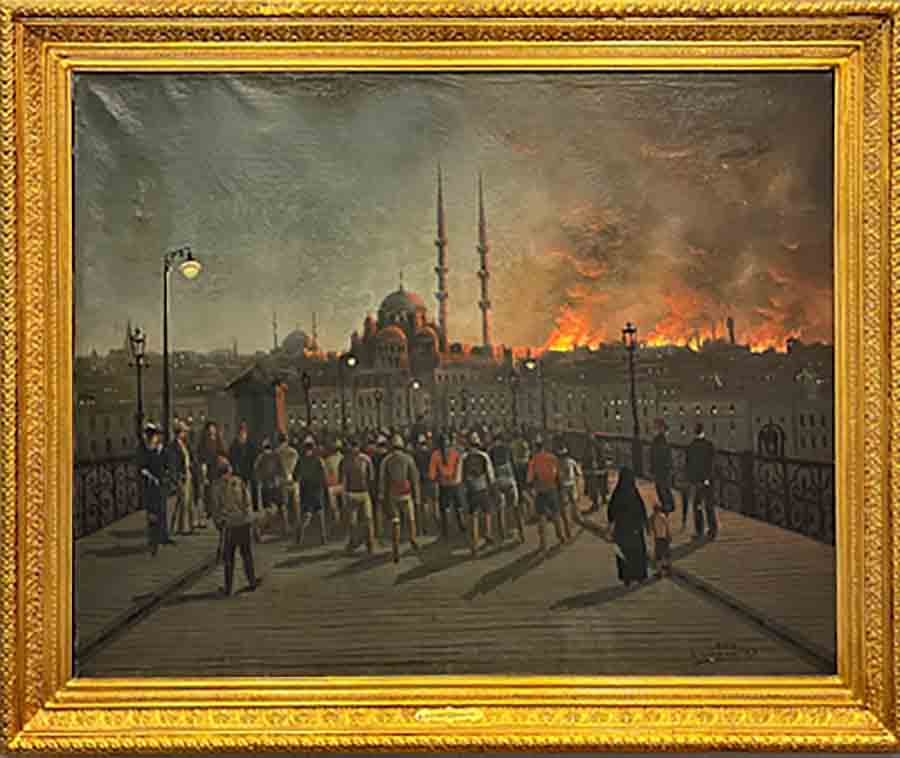
Yazmacıyan was among the artists who depicted the daily life, architecture, and natural light atmosphere of Istanbul in their paintings; he is particularly known for his works focusing on areas such as the Bosphorus, Galata, Moda, and Fenerbahçe. He is considered one of the representatives of the urban-themed painting tradition that developed in the late Ottoman period.
Artistic Influences and Stylistic Features;
Yazmacıyan’s painting language presents a visual world that can be compared, especially to that of Mıgırdiç Civanyan (1848–1906). The artist; In terms of landscape choices, color harmonies, and subject preferences, he exhibited an approach quite similar to Civanyan.
However, Yazmacıyan’s brushwork is faster and sometimes more free. One of the main reasons for this is that, like many painters of the period, the artist had to make a living by painting. Like Civanyan, Yazmacıyan had to produce a large volume of work. This situation could create differences in the technical finish of the paintings, especially in commercial commissioned works. Nevertheless, Yazmacıyan’s paintings for local Armenian churches show a much more careful, detailed, and refined craftsmanship. In these works, figurative detail, compositional balance, and surface workmanship are significantly enhanced.
Painter and Craftsman Identity: The Artist in the Ottoman Urban Economy;
One of the most striking examples for understanding Yazmacıyan’s artistic practice is the double-sided tin shop sign he prepared for his own business. On one side of the sign, the artist depicts himself painting. On the other side, there is a still-life composition. This visual choice is a kind of visual advertisement that clearly shows potential clients that he accepts commissions for both portraits and still lifes.
This example is important because it shows that in late 19th and early 20th century Istanbul, painters also worked as craftsmen and tradesmen. It also suggests that painting was not only an aesthetic object at that time, but also a commodity that was commissioned, produced, and had economic value.
The position of non-Muslim minority artists within the Ottoman economic system is closely related to the commission-based production model.
Figurative and Symbolic Works;
One of Yazmacıyan's most striking and controversial works is the composition known as "The Charming Woman with Poison in Her Mouth."
This work depicts a standing naked male figure. The figure is surrounded by a Basilisk, a half-snake, half-human form with claws resembling long nails.
The Basilisk figure is positioned in the composition as if looking at a divine power; However, this gaze carries a sense of anger and tension stemming from the inability to fulfill one's desires. One of the strongest plastic contrasts in the painting is the color and surface contrast between the pinkish body of the male figure and the red-silvered, blue-black, snake-like creature. One of the most controversial elements of the composition is the red-white bohemian cup held by the figure. The content and symbolic meaning of this object are not definitively known. However, some interpretations associate this element with themes of poison, sin, worldly desire, or death.
Work – Production – Exhibition / Collection Chronology;
Late 19th Century – Istanbul Workshop and Commission Period (≈ 1885 – 1905)
General production character
• Istanbul landscapes
• Port and sea-themed paintings
• Architectural cityscapes
• Church commissions (more detailed and meticulous technique)
• Portrait and still life commissions
During this period, the artist is one of the representatives of a structure in Ottoman urban life where painters also worked within a craftsman-merchant production model.
His Place in Art History;
Garabet Yazmacıyan is among the painters who continued the landscape tradition centered in Istanbul during the late Ottoman period. His works are important in terms of:
• Urban memory
• Architectural record-keeping
• Late Ottoman city life
• Artist-craftsman relationship.
Today, the artist's works are mostly found in private collections, the antique art market, and auctions.
-

- Garabet Yazmacıyan

-

- Garabet Yazmacıyan

-

- Garabet Yazmacıyan

-

- Garabet Yazmacıyan

-

- Garabet Yazmacıyan

-
- Garabet Yazmacıyan

-

- Garabet Yazmacıyan

-

- Garabet Yazmacıyan

-

- Garabet Yazmacıyan

-

- Garabet Yazmacıyan

-

- Garabet Yazmacıyan

-

- Garabet Yazmacıyan
-

- Garabet Yazmacıyan

-

- Garabet Yazmacıyan
