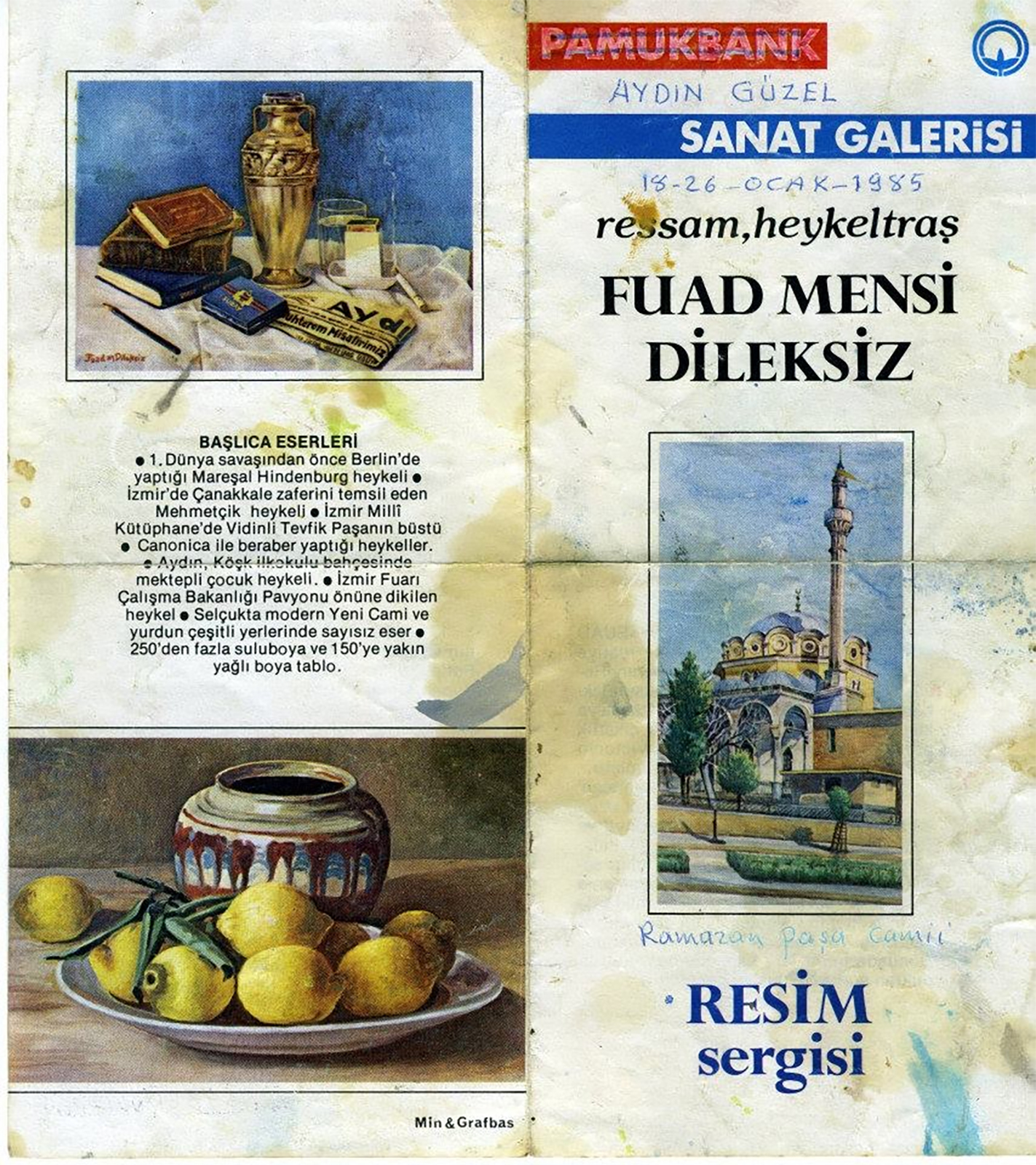


Who Was Fuat Mensi Dileksiz? (April 10, 1880 – May 29, 1965): Painter and Sculptor
Life;
Fuat Mensi Dileksiz was a painter and sculptor born on April 10, 1880, in the Basmane-Tilkilik district of İzmir. Born in Ottoman-era İzmir during the late 19th century, the artist created works in both painting and sculpture; he spent a significant portion of his life traveling between Europe and Anatolia, eventually settling in the Tire district of İzmir for his final years. His place in the history of Turkish painting and sculpture is assessed primarily through his contributions to early Turkish sculpture, his monuments and busts in İzmir, and his paintings depicting Aegean landscapes and still lifes.
Fuat Mensi came from a wealthy, traditional background. His father was Ahmet Nuri Efendi—a figure noted in some sources as having been a tutor to Sultan Abdülaziz. His family did not look favorably upon the interest in painting and sculpture he showed as a child. It is reported that, facing his father’s opposition to his artistic pursuits, he left home at a young age and headed to Europe in search of art education. Research and exhibition texts from 2021 and 2026 highlight this conflict between family and art as a pivotal turning point in the artist’s life story.
After completing his secondary education in İzmir, Mensi traveled to France, where he pursued art education and studio work in the Paris and Marseille areas. Auction records indicate that he worked in the studio of Charles Despiau in Paris before moving to the studio of V. Marcucci. Some biographical sources specifically highlight his work in sculpture alongside Despiau. This period marked the years when Mensi established a direct connection with the European academic and studio tradition.
Mensi’s years in Europe were not limited to education alone; records indicate that, in addition to France, he spent time in Germany, Italy, and Greece, where he engaged with various artistic circles and worked as an independent artist. This dynamic lifestyle laid the groundwork for the concurrent development of European influences in his art and his interest in the Aegean region.
It is reported that during World War I, he was captured by the British and sent to Malta, but was later released and returned to his artistic endeavors. After returning to İzmir, he became a more prominent figure in the city’s art and culture scene. The *Mehmetçik* (Soldier) Statue, which he created following the 1915 Gallipoli Campaign, was installed in the Poligon district of İzmir but was destroyed during the city’s occupation on May 15, 1919. Although this work has not survived to the present day, it is cited as one of the most significant examples of Dileksiz’s early monumental sculpture work.
Another major development in his artistic career following the War of Independence was the Atatürk Monument project in İzmir. Fuat Mensi Dileksiz participated in the creation of the Atatürk statue—executed by the Italian sculptor Pietro Canonica in 1925—at the initiative of İzmir Governor Kazım Dirik. According to sources, Mensi worked alongside Canonica to prepare the statue's plaster mold, while the bronze casting process was carried out in conjunction with Canonica's studio. Thus, Dileksiz played a role in the production process of one of the significant monumental sculpture projects of the early Republican era.
Having settled in İzmir during the Republican period, Mensi continued to produce paintings alongside his sculptural work. He particularly captured the natural and architectural landscapes of the areas surrounding İzmir, Aydın, Bergama, Dikili, Ayvalık, and Tire in his paintings. The fact that works depicting landscapes from Tire, Aydın, Bergama, Dikili, and Ayvalık—sourced from various collections—were brought together for an exhibition held in 2026 demonstrates the scope of this Aegean-focused body of work.
Mensi arrived in Tire in 1952, settled in the Derekahve area, and spent the final period of his life there. He lived in very modest conditions in a small house that he had either built himself or arranged simply. Over time, the people of Tire came to call him "Beybaba" (Father-Gentleman). Reminiscences shared by Seha Gidel describe him as an artist who lived outside the art establishment yet commanded the respect of those around him; he was a familiar figure wandering the streets of Tire with his white beard, cane, fedora, and woven shopping bag.
It is said that his surname, "Dileksiz" (meaning "one who makes no requests" or "desireless"), was linked to his philosophy of life. According to Seha Gidel, Mensi was a man who valued self-reliance and made a point of asking nothing of anyone. Consequently, the surname "Dileksiz," which he chose for himself, is considered a reflection of his personality.
Fuat Mensi Dileksiz passed away in Tire in 1965. While a significant number of sources cite May 29, 1965, as the date of his death, some local records indicate May 28. Conflicting accounts exist regarding exactly where his body was discovered—whether inside his house or in the garden—several days after his passing. As a result, there is a slight discrepancy among sources concerning the precise day of his death.
Artistic Approach;
It is impossible to categorize Fuat Mensi Dileksiz's art within a single discipline; he produced work simultaneously as a painter, sculptor, and monument artist. While his sculptural work gravitated toward portraits, busts, and monuments, his paintings focused primarily on landscapes and still lifes.
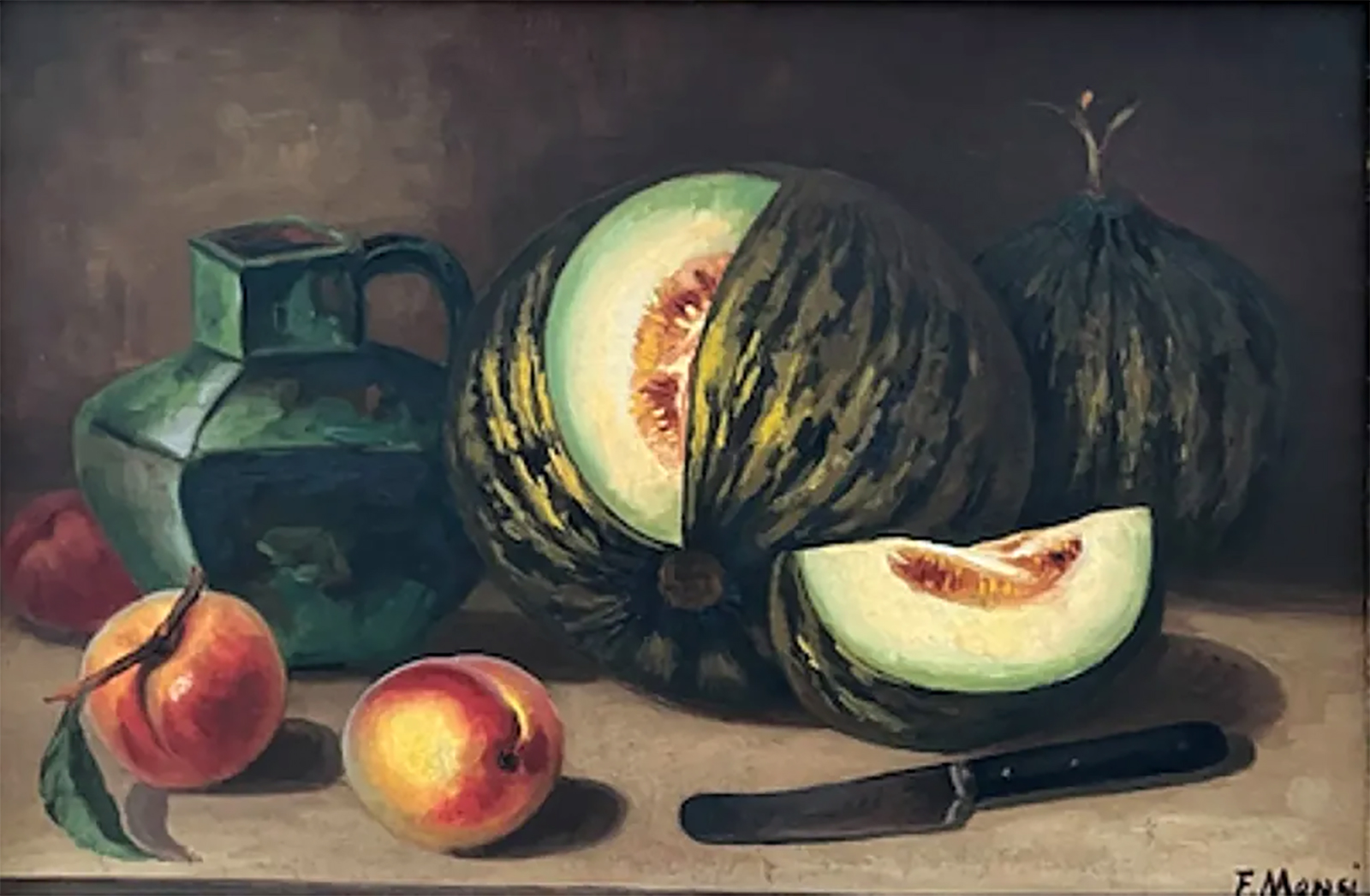
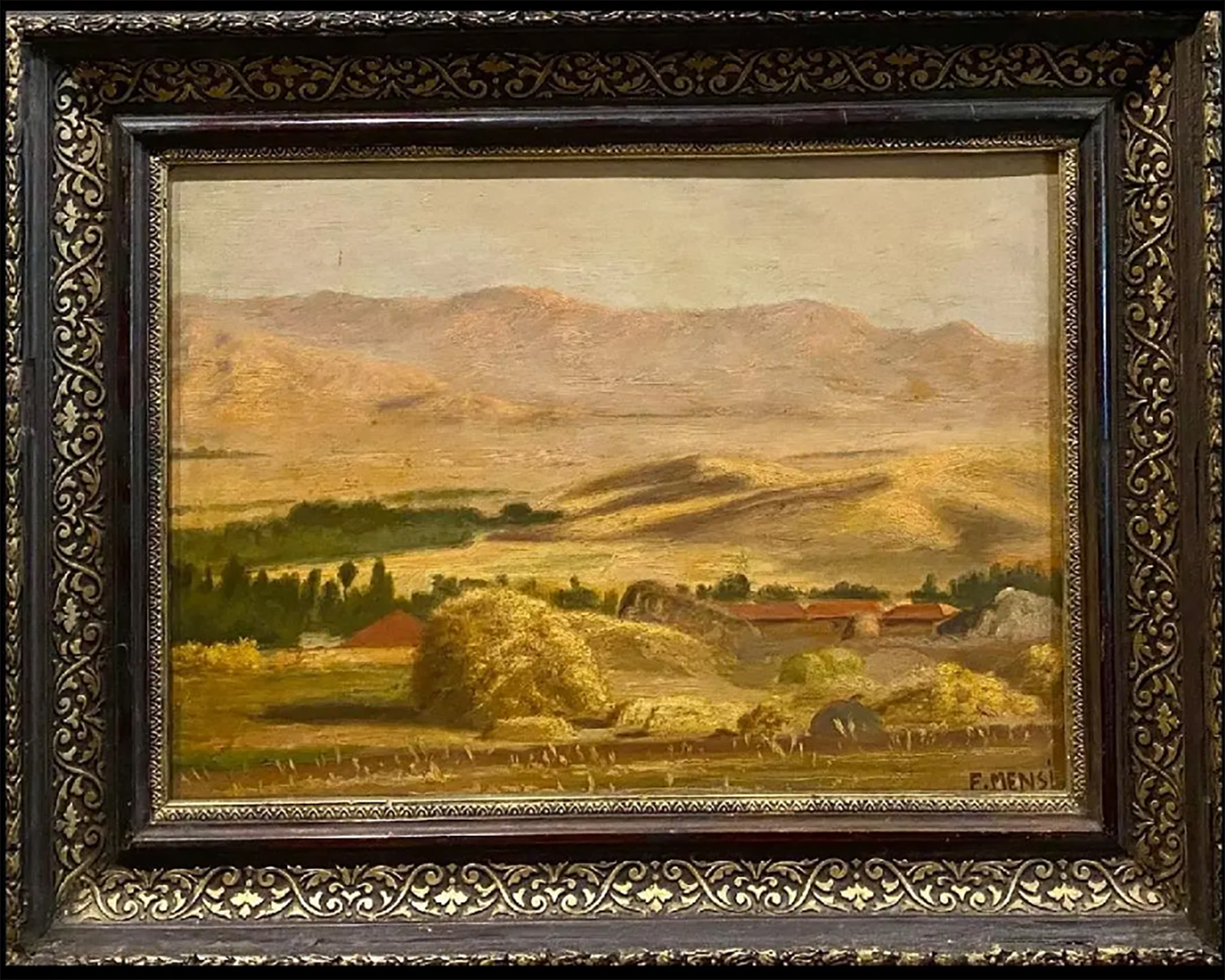
His paintings reflect an approach rooted in direct observation. The light, vegetation, stone structures, streets, coastlines, and rural landscapes of the Aegean region serve as the artist's primary sources of inspiration. Existing records often link his landscape and still-life works to an Impressionist sensibility; however, there is insufficient evidence to classify Dileksiz as a direct follower of any specific European Impressionist artist. It is more accurate to describe him as a painter who synthesized the artistic experience he gained in Europe with his observations of Anatolia—and the Aegean region in particular.
Assessments shared by Seha Gidel reveal that Dileksiz was regarded as a formidable painter, particularly in the genre of still life. Gidel contextualized Dileksiz's still lifes alongside those of late 19th- and early 20th-century Turkish painters such as Şeker Ahmet Paşa, Süleyman Seyyid, and Hoca Ali Rıza. Although this assessment represents a subjective perspective from a fellow artist, it serves as a significant record of how Dileksiz's painting talent was perceived within the artistic circles of his time.
In Mensi's paintings, nature is not merely a background element; trees, houses, roads, coastlines, stone walls, doorways, fruits, and flowers constitute the fundamental components of the composition. The artist strives, in particular, to capture the local character of the Aegean. Consequently, his works are significant not only for their aesthetic value but also within the context of 20th-century... ...they are also significant as works that document the visual memory of the İzmir and Aegean region during the first half of the century.
Themes and Technical Characteristics;
An examination of Dileksiz's surviving paintings reveals three primary subject groups: landscapes, still lifes, and urban or rural scenes.
His landscapes prominently feature the natural scenery of Ayvalık, Aydın, Tire, and the environs of İzmir. Coastal areas, trees, stone structures, gardens, and rural landscapes are subjects the artist frequently addressed. His works depicting Ayvalık include scenes that reflect the region's economic and architectural character, such as olive oil factories.
Still lifes constitute one of the most significant categories in Dileksiz's body of work. Quinces, figs, various fruits, and botanical elements frequently appear in his still-life paintings. The work titled "Ayvalar" (Quinces)—noted to be in the collection of the Ankara State Art and Sculpture Museum—is a prime example of his output in this genre. Additionally, a still-life painting measuring 30 × 47 cm, held in the Hayati Görkey Collection, is another documented example from this group.
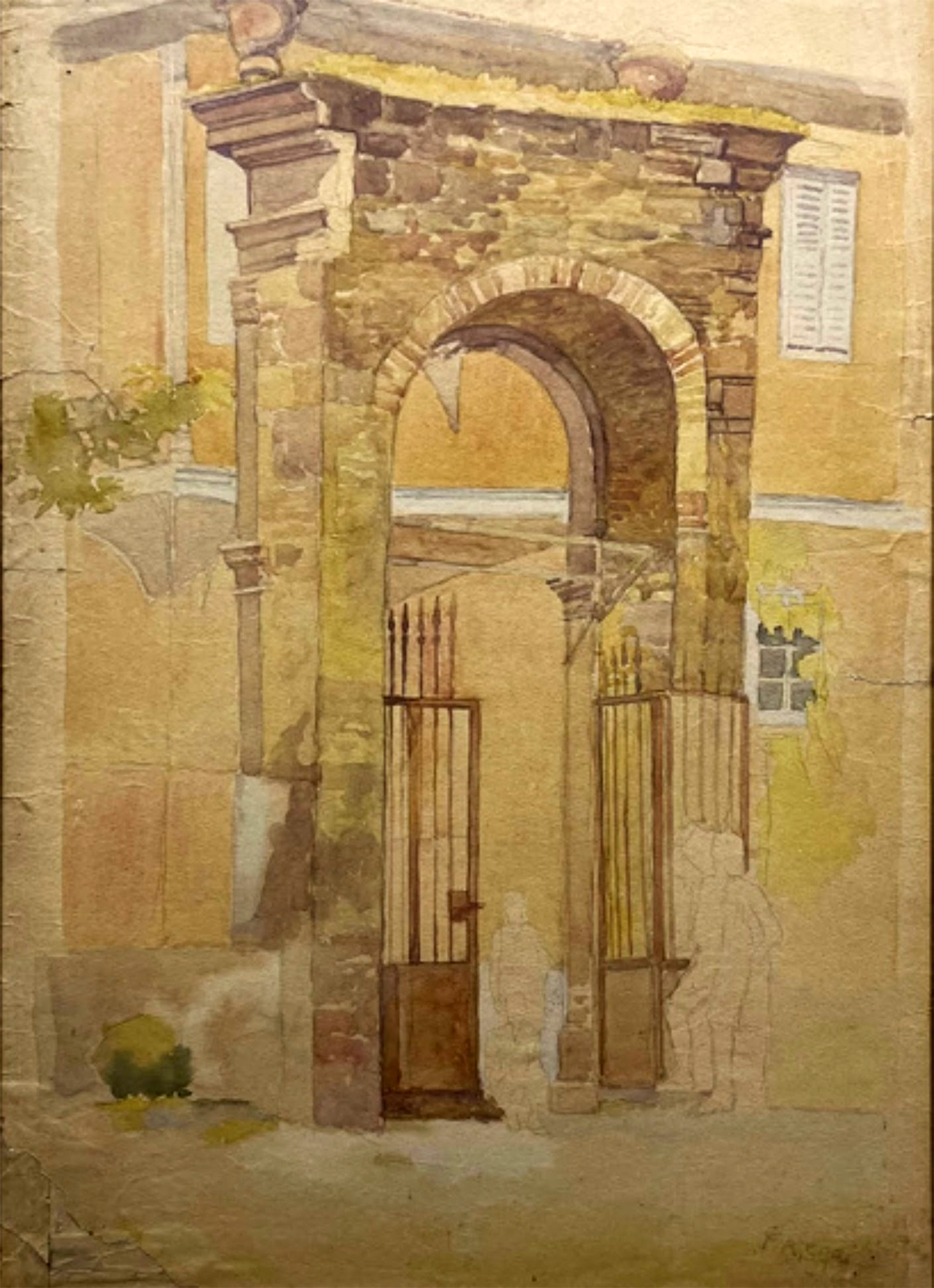
Technically, the artist is known to have worked in both oil and watercolor. Auction records document works executed in oil on hardboard, oil on cardboard, and watercolor on paper. The appearance of a watercolor work titled "Street Scene" (measuring 12¼ × 20¼ inches) in a US auction record demonstrates that Dileksiz's works have found their way into collections outside Turkey.
Light, atmosphere, and the observation of the open-air environment play a particularly important role in the artist's work. Structures and natural elements are often linked not so much by strong linear contours as by relationships of color and tone. This characteristic places his landscapes somewhere between academic depiction and Impressionist sensibility.
Major Works and Groups of Works;
As a significant portion of Fuat Mensi Dileksiz's paintings and sculptures has been dispersed, a complete catalogue of his works does not exist. Nevertheless, the following are some of the works and groups of works that can be documented through archives, museums, collections, and auction records:
• Mehmetçik Statue – Erected at the İzmir Poligon following the 1915 Gallipoli Victory; destroyed during the occupation of İzmir in 1919.
• Atatürk Monument Project – Work involving the preparation of plaster molds for the monument project executed in İzmir in 1925 in collaboration with Pietro Canonica.
• Bust of Vidinli Tevfik Pasha – A work located at the İzmir National Library, bearing the signature "Fuat Mensi" and the date 1916 on its pedestal.
• Bust of Governor Rahmi Bey – One of the portrait busts located at the İzmir National Library.
• Statue of Culture – A statue symbolizing the Republic's approach to culture and education, placed in a school garden in the Köşk district of Aydın in 1938.
• Quinces (*Ayvalar*) – A still-life painting noted as being in the collection of the Ankara State Art and Sculpture Museum.
• Still Life – Oil on cardboard, 30 × 47 cm; Hayati Görkey Collection.
• Ayvalık – Oil on hardboard (*duralit*), 29 × 47 cm.
• Ayvalık Olive Oil Factory – A view of Ayvalık recorded as dating from 1944.
• Aydın Ramazan Pasha Mosque – A work featuring an architectural view.
• Historical Gate – Watercolor on paper.
• Village – Watercolor on paper; a work noted as having family authentication. • Rocks – Oil on paper, 24 × 30 cm.
• Seascape – Watercolor on cardboard, 20 × 26 cm.
• Street Scene with Shops and Figures – Watercolor on paper.
These works demonstrate that Dileksiz's artistic repertoire was not limited to still lifes; he also addressed rural landscapes, urban architecture, seascapes, street scenes, and historical structures.
Sculptural Works;
It would be incomplete to evaluate Fuat Mensi Dileksiz's place in Turkish art history solely through his identity as a painter. In particular, the sculptures he created—both prior to the early Republican era and during the Republic's formative years—establish him as a significant figure in the early history of Turkish sculpture.
The Bust of Vidinli Tevfik Pasha, located at the İzmir National Library, is one of the artist's most important surviving sculptures. The Ottoman-script signature "Fuat Mensi" and the date "1916" on the bust's pedestal played a crucial role in authenticating the work. This signature was also specifically highlighted in news coverage regarding the 2026 exhibition.
The Bust of Governor Rahmi Bey is another significant work associated with the İzmir National Library. This indicates that Dileksiz created not only anonymous monuments but also portraits of prominent state and public figures of the era.
The *Mehmetçik* (Soldier) Statue in İzmir’s Poligon district is another key work demonstrating the artist's historical importance, even though it has not survived to the present day. Created after 1915, the statue was destroyed during the occupation of İzmir—a fact brought back to public attention through the 2026 exhibition and related publications.
Solo Exhibitions and Posthumous Exhibitions;
It is currently difficult to compile a comprehensive and reliable chronology of the solo exhibitions held by Fuat Mensi Dileksiz during his lifetime. A primary reason for this is that the artist remained outside institutional art circles for a long period, and a significant portion of his works ended up in the hands of private collectors.
Nevertheless, significant exhibitions aimed at reintroducing the artist have been organized since his death:
• 1986 – Fuat Mensi Dileksiz Exhibition – Ulus 100th Anniversary Bazaar Art Gallery, Ankara. The *Cumhuriyet* newspaper archives (dated March 23, 1986) indicate that the exhibition opened on March 21 and ran until April 3.
• 1987 – From Our Masters: Fehiman Duran, Fuat Mensi Dileksiz, and Other Artists – Istanbul. The *Cumhuriyet* archives list Dileksiz as a participant in this exhibition, which was held between May 16 and May 31, 1987.
• 1988 – Bakırköy Art Gallery Group Exhibition – Istanbul. The *Cumhuriyet* archives note that works by Fuat Mensi Dileksiz, Abdullah Taktek, and Kemal Benlioğlu were displayed at this exhibition.
• 2026 – Sculptor and Painter Fuad Mensi Dileksiz – Historic Akın Passage, Izmir. Curated by Ömer Faruk Şerifoğlu, this exhibition took place from March 12 to April 12, 2026. Coinciding with the exhibition, the first comprehensive book dedicated to the artist's life was also launched.
The 2026 exhibition is particularly significant for presenting the artist's paintings and sculptures within the same context. The works featured in the exhibition were gathered from various private collections.
Collections Containing His Works;
A significant portion of Fuat Mensi Dileksiz's works is held in private collections. It was announced that the pieces featured in the 2026 exhibition were gathered from collectors such as İnanç Hürtürk, Ömer Faruk Şerifoğlu, Yılmaz Temizocak, Cem Üsküp, Ahmet Merey, Zerrin Tuluğ, and Veli Yarbaş.
Additionally, it is noted that some of the artist's works are part of the Ankara State Art and Sculpture Museum collection. The still-life painting titled "Ayvalar" (Quinces) is one of the works associated with this collection.
The İzmir National Library is one of the most important public venues housing Dileksiz's sculptures; the busts of Vidinli Tevfik Pasha and Governor Rahmi Bey are preserved there.
Various studies also indicate the presence of paintings by—or attributed to—the artist at the Tire City Museum. Materials related to the visual and oral history of the artist's final years are also found in Tire.
Auction records show that the artist's works have, over time, found their way into collections outside Turkey. A documented example of this is the appearance of his watercolor titled "Street Scene with Shops and Figures" in a 2019 auction record in the USA.
The Tire Period and the "Beybaba" Persona;
Fuat Mensi Dileksiz is remembered not only for his artistic identity but also for the lifestyle he led in Tire.
Having lived in Tire-Derekahve since 1952, the artist led an extremely simple life, far removed from traditional art circles. Seha Gidel’s memoirs recount how he would climb Mount Güme to paint the landscape and sometimes work outdoors accompanied by his donkey. In this respect, Dileksiz appears to have favored an artistic practice rooted in direct observation rather than the traditional studio-based approach.
The people of Tire knew him as "Beybaba." Accounts of the painter's daily life reveal that he was not entirely detached from society; on the contrary, he established a unique rapport with local tradespeople and neighborhood residents.
The financial hardships and solitary lifestyle of the artist's later years also constitute a significant part of his biography. It has been reported that, following his death, some of the artworks and personal belongings in his home went missing or were removed. This circumstance may be considered one of the factors explaining why his works are found today in scattered private collections and auction records.
His Place in the History of Turkish Painting;
Fuat Mensi Dileksiz is one of the lesser-known figures in the history of Turkish painting, yet he holds a significant place in the art history of the Aegean region and, specifically, Izmir.
His position in art history emerges at the intersection of two distinct creative fields. While he participated in the realm of painting through his still lifes and landscapes, he simultaneously contributed to the development of early Turkish sculpture through his busts and monuments.
Dileksiz’s significance is particularly evident in the art history of Izmir. Works such as the Bust of Vidinli Tevfik Pasha, the Bust of Governor Rahmi Bey, the lost *Mehmetçik* (Soldier) Statue, and his collaboration with Pietro Canonica on the Atatürk Monument establish him as a key figure in Izmir’s early 20th-century sculptural culture.
As a painter, Dileksiz can be categorized among those artists who depicted the natural and architectural landscapes of the Aegean. His works—featuring locations such as Tire, Ayvalık, Aydın, Bergama, and Dikili—are not merely aesthetic paintings but also integral parts of the region's historical visual memory. It is also noteworthy that the artist had not been sufficiently studied for a long period. In 1984, art historian Zahir Güvenli published a comprehensive article titled "Fuat Mensi Dileksiz: A Painter on the Verge of Being Forgotten" in the magazine *Türkiyemiz*. Bibliographic details of this article are clearly listed in the Marmara University catalog records.
The exhibition held in İzmir in 2026 and the book *Fuad Mensi Dileksiz: An Extraordinary Patriot—From Espionage to Reclusion*, prepared by Ömer Faruk Şerifoğlu, indicate that the artist is once again becoming a subject of research. The aim of the exhibition, organized by Hafıza İzmir, is to restore Dileksiz's life and works to cultural memory.
General Overview;
Fuat Mensi Dileksiz’s life was an artistic journey intertwined with the turbulent periods of Turkish history, spanning from the final era of the Ottoman Empire to the early years of the Republic.
His biography is rendered extraordinary by a series of unique experiences: a childhood in İzmir, art education in France, studio experiences across Europe, years spent in the Balkans and Tripoli, the impact of wars and the occupation of İzmir, the founding era of the Republic, his collaboration with Pietro Canonica, his shift toward painting Aegean landscapes, and finally, his secluded life in Tire.
However, Dileksiz’s true significance in art history lies beyond his adventurous life story. His sculpture work in İzmir is valuable for understanding the public art landscape of the early Republican era, while his still-life paintings and landscapes are significant for tracing the visual memory of the Aegean region.
The survival of the busts of Vidinli Tevfik Pasha and Governor Rahmi Bey, in particular, offers the opportunity to examine the artist's sculptural work firsthand. Conversely, the destruction of the *Mehmetçik* (Soldier) Statue—created in 1915—represents a significant loss in the history of early İzmir sculpture.
Regarding his identity as a painter, one of Dileksiz’s most striking characteristics was his direct observation of the Aegean landscape. The sea and architecture of Ayvalık, the architecture of Aydın, the streets of Tire, rural settings, fruits, and still-life subjects formed the fundamental elements of his artistic world.
Today, the fact that Fuat Mensi Dileksiz’s works are scattered across various private collections makes it difficult to compile a comprehensive catalogue of his oeuvre. Consequently, the exhibition and book project realized in 2026 hold special importance for the documentation of his art. By bringing together works from various collections, the exhibition has enabled a more comprehensive assessment of Dileksiz’s output in painting and sculpture.
In this respect, Fuat Mensi Dileksiz is not merely a “forgotten painter”; he is a significant artist through whom the early art history of İzmir, the development of Turkish sculpture, and Aegean landscape painting can be examined in conjunction. Renewed research into the artist, the documentation of his work, and the gathering of pieces held in diverse collections will contribute to completing a missing chapter in the history of Turkish painting and sculpture.
-

- Fuat Mensi Dileksiz

-

- Fuat Mensi Dileksiz

-
- Fuat Mensi Dileksiz

-

- Fuat Mensi Dileksiz
-

- Fuat Mensi Dileksiz

-

- Fuat Mensi Dileksiz
-

- Fuat Mensi Dileksiz

-

- Fuat Mensi Dileksiz

-

- Fuat Mensi Dileksiz

-

- Fuat Mensi Dileksiz

-

- Fuat Mensi Dileksiz

-

- Fuat Mensi Dileksiz

-

- Fuat Mensi Dileksiz

-

- Fuat Mensi Dileksiz

-

- Fuat Mensi Dileksiz

-
- Fuat Mensi Dileksiz

-

- Fuat Mensi Dileksiz
-

- Fuat Mensi Dileksiz