


Who was Altan Gürman? (February 25, 1935, Istanbul – April 26, 1976, Istanbul)
One of the Pioneering Figures of Turkish Contemporary Art
Altan Gürman was an innovative artist who played a significant role in the transition from modernism to contemporary and postmodern art in Turkey during the second half of the 20th century, leaving a profound impact despite his short life. He is considered one of the pioneering figures in Turkish art history, particularly for his experimental use of materials, conceptual approach, and reformist stance in art education.
Life and Education;
Altan Gürman was born on February 25, 1935, in Kadıköy, Istanbul, and passed away on April 26, 1976, in Istanbul.
He began his art education at the Istanbul State Academy of Fine Arts (today’s Mimar Sinan University of Fine Arts). He studied painting there between 1956 and 1960. Later, between 1963 and 1966, he studied painting and printmaking at the Paris Higher School of Fine Arts.
The social and political environment he witnessed during his years in Paris was decisive in transforming his understanding of art. During this process, he came to believe that art was not only aesthetic but also had important social and intellectual dimensions.
Academic Career and Art Education Reform:
He began working as an assistant at the Istanbul State Academy of Fine Arts in 1967 and became an associate professor in 1971.
He opposed the traditional master-apprentice model in art education, advocating for an experimental, interdisciplinary, and Bauhaus-like educational model. He played an active role in the creation of the Basic Art Education program.
He started working as Sabri Berkel’s assistant at the Istanbul State Academy of Fine Arts in 1967 and became an associate professor in 1971. He participated in the Sao Polo Biennial in 1969 and the India Triennial in 1971. He was part of the founding faculty of the Department of Basic Art Education at the Istanbul State Academy of Fine Arts (İDGSA), which proposed a common curriculum for first-year students in all departments and became active in 1969, and became its head in 1974. He married Bilge Gürman. In this reform movement, he worked with figures who shaped contemporary art education and contributed to the upbringing of new generations of artists in Turkey.
His Artistic Perspective:
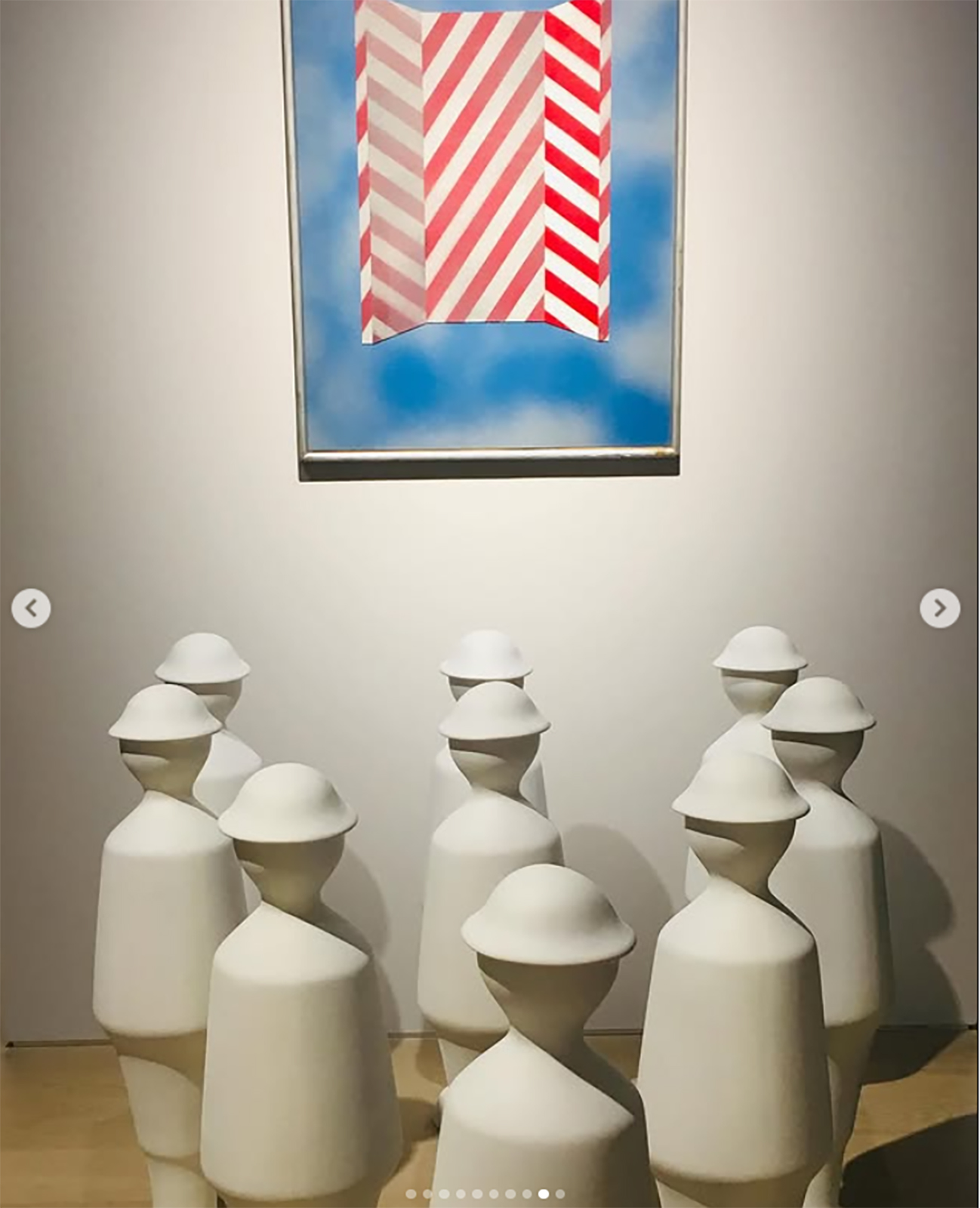
After graduating from the Academy, he worked in an abstract expressionist style. During his years in Paris, he explored other ways of painting, first using words printed on canvas, then approaching the concepts of authority, war, armament, and bureaucracy critically with techniques such as collage, montage, and decoupage. Between 1965-69, he rebelled against the classical definition of landscape, showing natural scenes such as trees, hills, clouds, and green areas within geopolitical and military contexts, moving away from the rules of perspective. He preferred not to sign his works, questioning common materials, styles, and forms of expression. He named his works in series. “Art should be less sacred, closer to life.”
Gürman is one of the artists who questioned accepted art conventions both intellectually and formally.
In his art production, he used innovative techniques such as:
• Decoupage
• Montage
• Use of industrial paints and materials
• Mass production logic
• Graphic and statistical visual language
He interpreted Pop Art and Op Art influences in an original way from the 1960s onwards.
His fundamental approach was to see art not as a sacred realm, but as a part of daily life.
Awards;
He was part of the team that won the First Prize in the Side and Surroundings Tourism Planning Competition.
Jury Special Award at the "Turkish Contemporary Painters Association Exhibition", Istanbul, 1967.
Achievement Award at the 35th State Painting and Sculpture Exhibition, 1974.
His Place in Turkish Painting Art;
Altan Gürman is considered a pioneer in the development of contemporary and postmodern art in Turkey. He is mentioned alongside artists who created transformation in the same period:
• Füsun Onur
• Şükrü Aysan
• Özer Kabaş
Social criticism, political references, and the visual language of the industrial age hold an important place in his art.
International Participations and Exhibitions;
The artist also gained visibility in the international art scene.
• 1962 – Venice Biennale participation
• 1969 – São Paulo Biennale participation
• Various exhibitions and works in Paris and Europe
Early Death and Legacy;
Altan Gürman passed away at the age of 41. Despite his short life, he was a pioneer of conceptual art in Turkey. He is considered among the artists who laid the foundations.
Today, his works are included in contemporary art collections and continue to be studied through retrospective exhibitions and academic studies.
His Importance in Art History Altan Gürman:
• One of the pioneers of the transition from modernism to contemporary art
• One of the early representatives of conceptual art in Turkey
• One of the reformist academics in art education
• He is considered one of the advocates of interdisciplinary production.
-

- Altan Gürman

-

- Altan Gürman

-

- Altan Gürman

-

- Altan Gürman

-

- Altan Gürman

-

- Altan Gürman

-

- Altan Gürman

-

- Altan Gürman

-

- Altan Gürman

-

- Altan Gürman

-

- Altan Gürman

-

- Altan Gürman

-

- Altan Gürman

-

- Altan Gürman

-

- Altan Gürman

-

- Altan Gürman

-

- Altan Gürman

-

- Altan Gürman

-

- Altan Gürman

-

- Altan Gürman
-

- Altan Gürman
