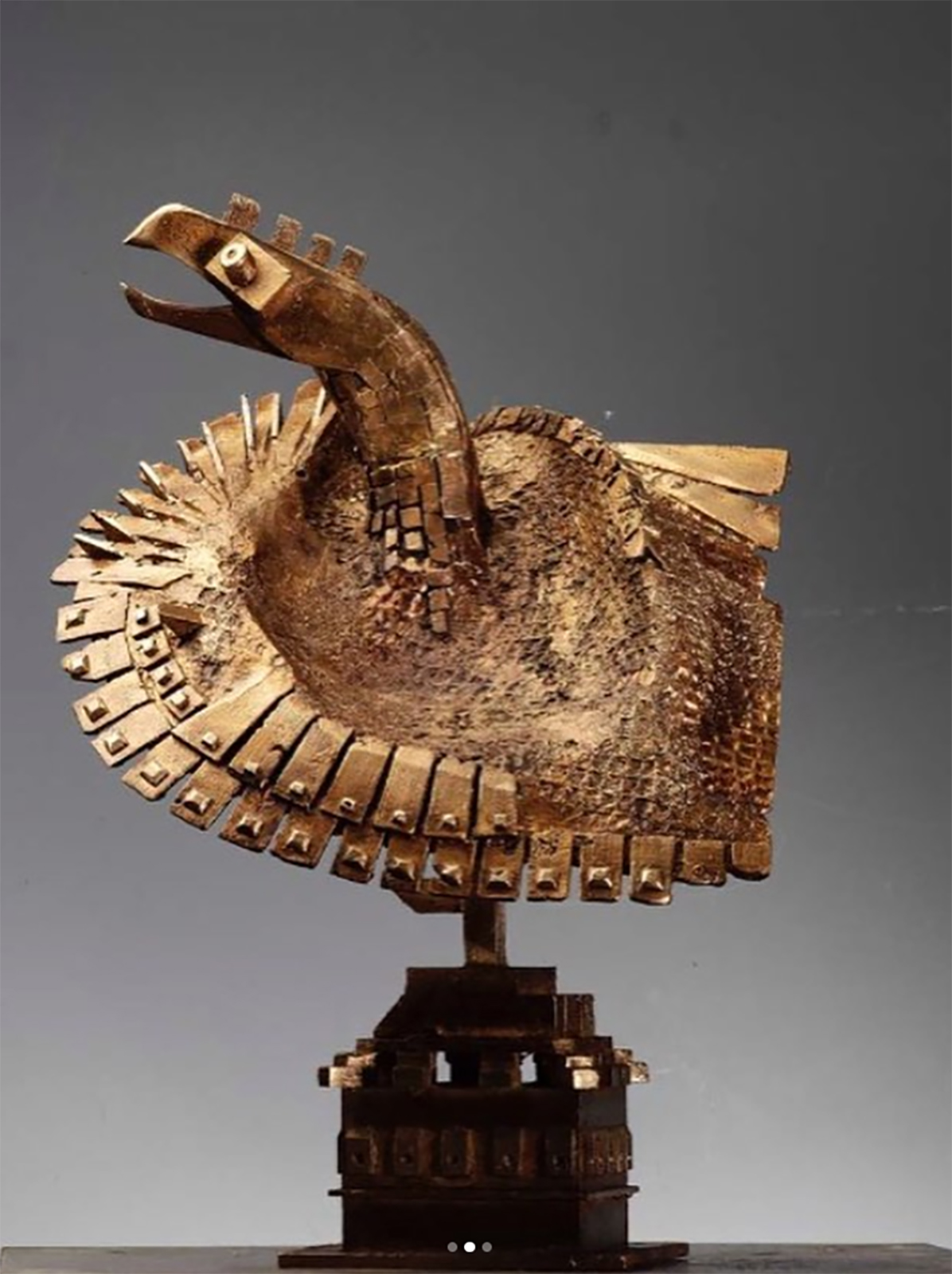


Who was Ali Teoman Germaner? (1934 – 2018)
Ali Teoman Germaner was born in Istanbul in 1934. He is one of the artists who played an important role in the modernization process of Turkish sculpture. He was also known as “Aloş” in art circles and due to the language he used in his works.
In 1949, he entered the Sculpture Department of the Istanbul State Academy of Fine Arts. Here, he became a student of founding masters of Turkish sculpture such as Rudolf Belling, Zühtü Müridoğlu, and Ali Hadi Bara. He graduated from the academy in 1957.
Between 1957 and 1959, he completed his military service. In 1960, he went to Paris on a scholarship from the French government. Between 1961 and 1965, he studied sculpture in René Collamarini’s workshop and engraving in William Stanley Hayter’s workshop at the École des Beaux-Arts.
In 1965, he began his academic career as an assistant at the Istanbul State Academy of Fine Arts. He became an associate professor in 1970 and a professor in 1976, and served as a faculty member and head of the Sculpture Department at Mimar Sinan University for many years. He continued in this position until his retirement in 2001.
From 2004 onwards, he continued his production in his private studio within the Istanbul Graphic Arts Museum (IMOGA). He passed away in Istanbul on February 24, 2018.
Artistic Perspective;
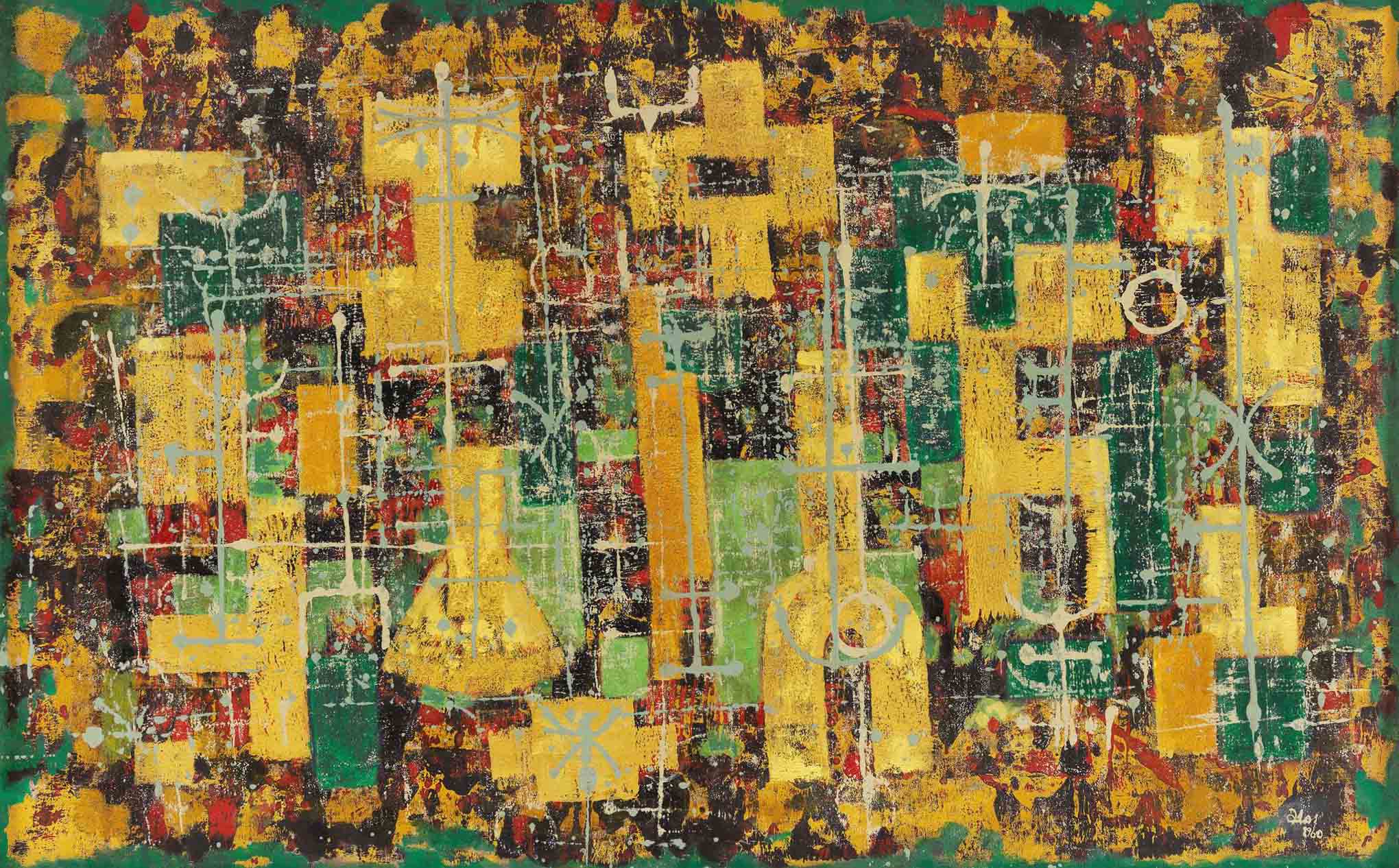
Germaner was not only a sculptor; he was also a versatile artist working in the fields of drawing, printmaking, painting, and conceptual production.
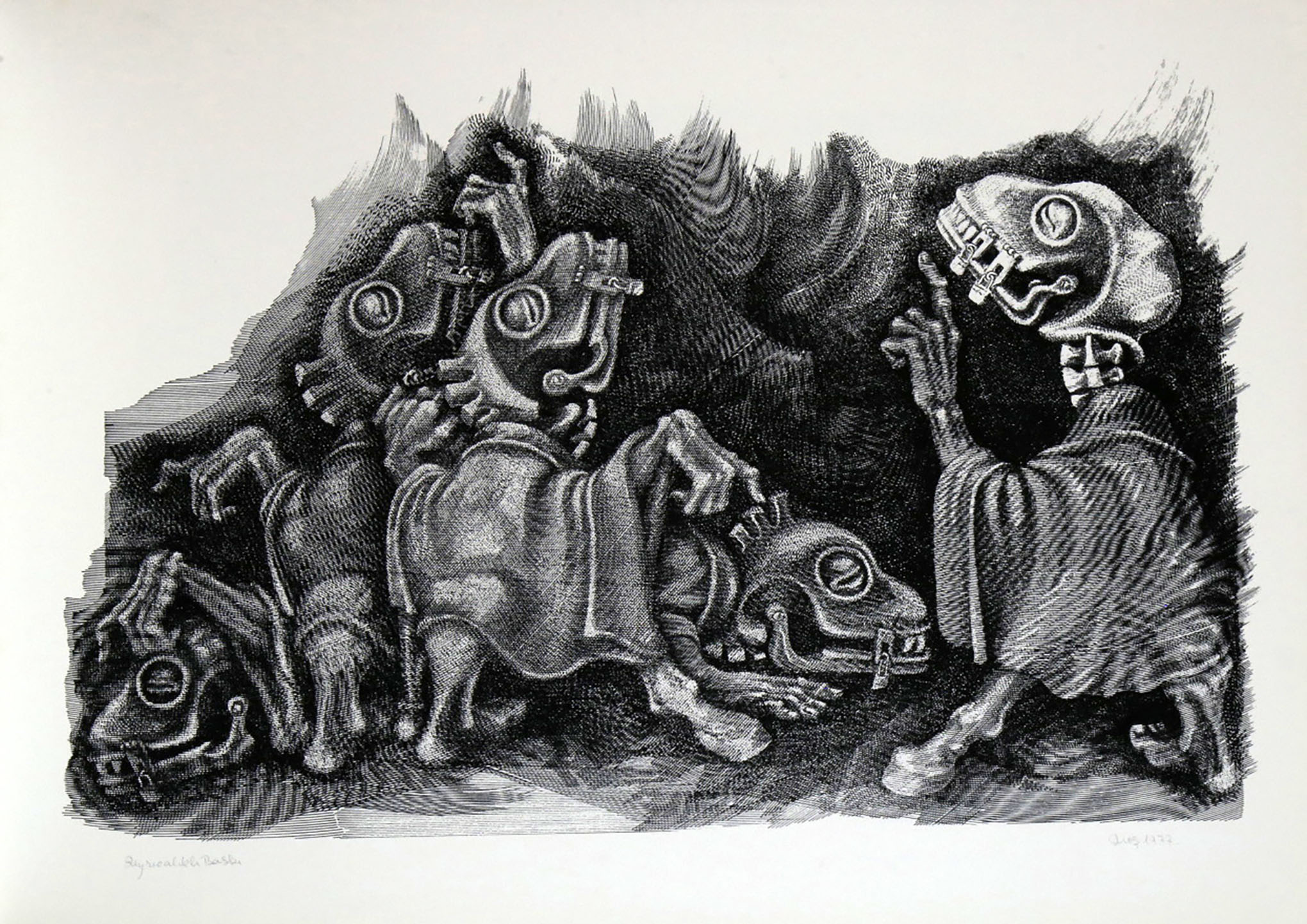
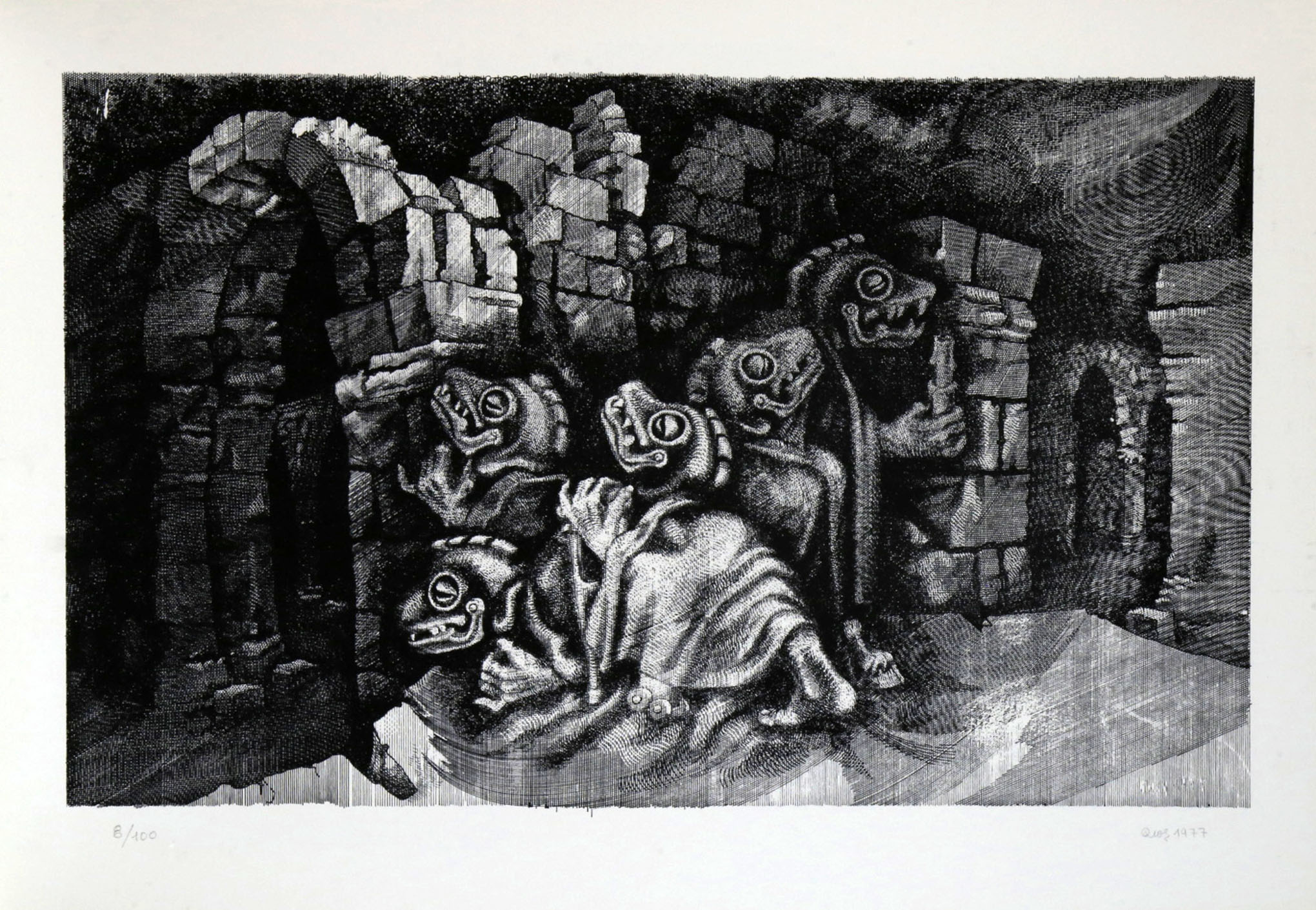
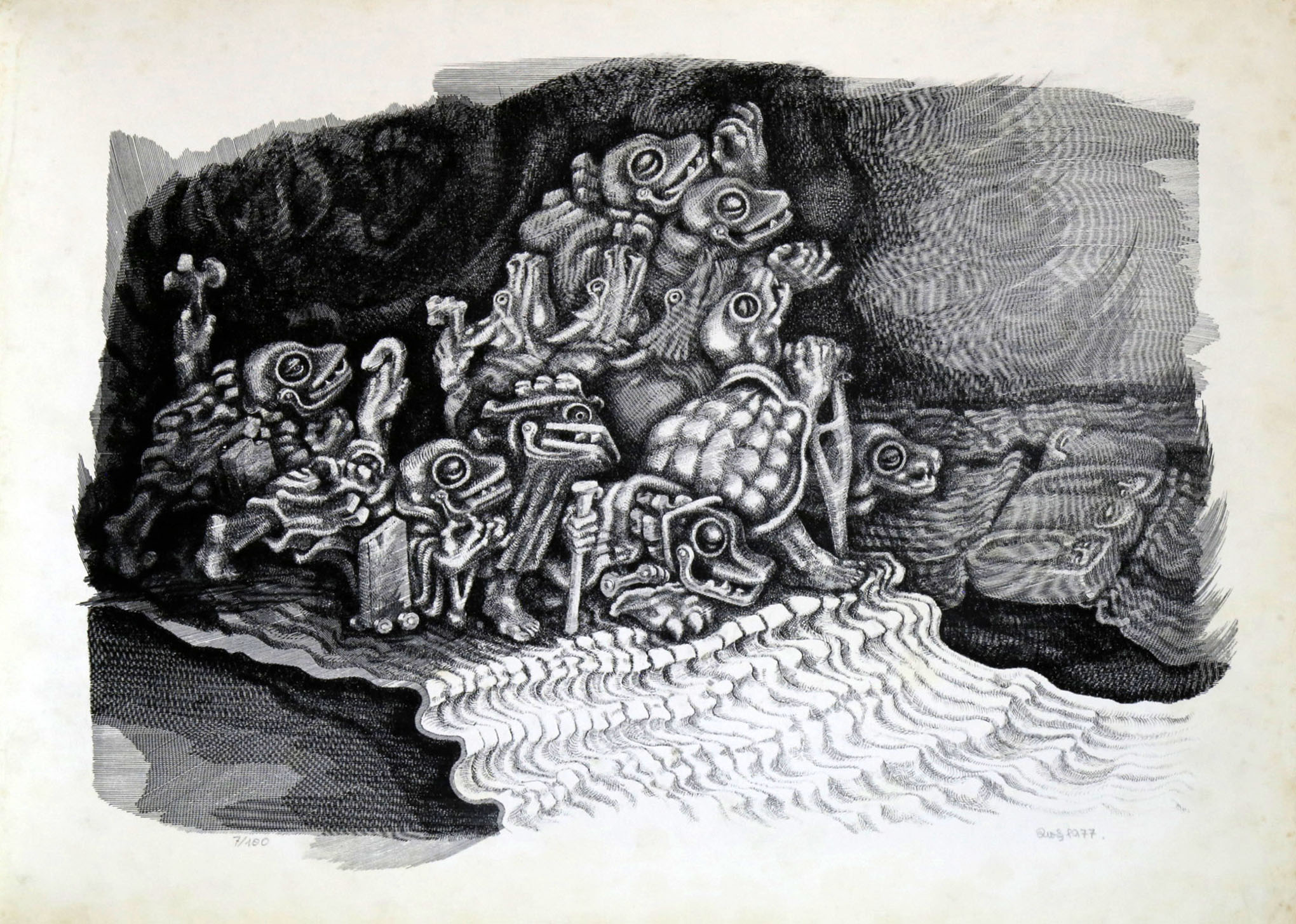
Time, memory, mythology, and the shared visual memory of civilizations hold an important place in his art. He developed fantastic figures and a symbolic narrative language nourished by the visual heritage of Mesopotamian, Egyptian, and Central American civilizations.
The “Aloşname” drawings he developed from the 1970s onwards became one of the characteristic elements of his art. These works are known as engraving-effect drawings that bear the traces of ancient cultures.
The artist’s visual language;
• Subconscious Images
• Dark-Light Contrast
• Themes of Hope and Fear
• Based on the Concept of Collective Memory.
Solo Exhibitions;
Germaner has held numerous solo exhibitions throughout his artistic career.
Highlights:
• 1952 – Maya Art Gallery, Istanbul (first solo exhibition)
• Comprehensive retrospective exhibitions covering his work from the 1950s to the present
• Bozlu Art Project – Selections including drawings, paintings and sculptures
• “ALOŞ: Yesterday, Today, Tomorrow” – CerModern retrospective exhibition (2025)
This comprehensive exhibition at CerModern explored the artist's work from the 1950s to the present, including sculptures, paintings, prints and Aloşname drawings.
Group Exhibitions and International Participation;
Germaner has participated in many exhibitions and biennials in Turkey and abroad.
His works;
• Paris
• Sao Paulo
• Alexandria Biennales
• Numerous exhibitions in Europe and the USA
He met with art audiences within the scope of these events.
He also contributed to the development of printmaking through IMOGA collaborations and contemporary art museums.
Awards;
Notable awards and achievements:
• State Painting and Sculpture Exhibition Award (1960s)
• Fatih Monument Project Competition – First Prize (1972)
• Ankara Art Institution Artist of the Year Awards
• Rumeli Holding Sculpture Competition Award
These awards demonstrate the strong impact of both his academic and artistic production.
Academic Identity and Contribution to Art Education;
Germaner is not only a productive artist; he is also an important figure in the academic development of Turkish sculpture.
At Mimar Sinan University:
• Workshop teaching
• Department head
• He made significant contributions to the training of new generation sculptors.
His Place and Importance in Turkish Art;
Ali Teoman Germaner:
• He is one of the second-generation masters of modern Turkish sculpture.
• He established a strong link between sculpture and printmaking.
• He combined academic art education with contemporary art production.
• He translated mythology and cultural memory into contemporary visual language.
His artistic life spanned more than half a century, and he witnessed many of the transformations in Turkish sculpture as both an academic and an artist.
His Artistic Legacy:
Germaner's works are currently:
• In museum collections
• In the IMOGA collection
• In private collections
• In international exhibitions.
He is considered by art historians as one of the masters of Turkish modern sculpture with high intellectual depth.
-

- Ali Teoman Germaner
-

- Ali Teoman Germaner

-

- Ali Teoman Germaner

-

- Ali Teoman Germaner

-

- Ali Teoman Germaner

-

- Ali Teoman Germaner
-
- Ali Teoman Germaner

-

- Ali Teoman Germaner
-

- Ali Teoman Germaner

-

- Ali Teoman Germaner

-

- Ali Teoman Germaner
-

- Ali Teoman Germaner

-

- Ali Teoman Germaner

-

- Ali Teoman Germaner

-

- Ali Teoman Germaner

-

- Ali Teoman Germaner

-

- Ali Teoman Germaner

-

- Ali Teoman Germaner

-
- Ali Teoman Germaner

-

- Ali Teoman Germaner

-

- Ali Teoman Germaner

-
- Ali Teoman Germaner

-

- Ali Teoman Germaner