

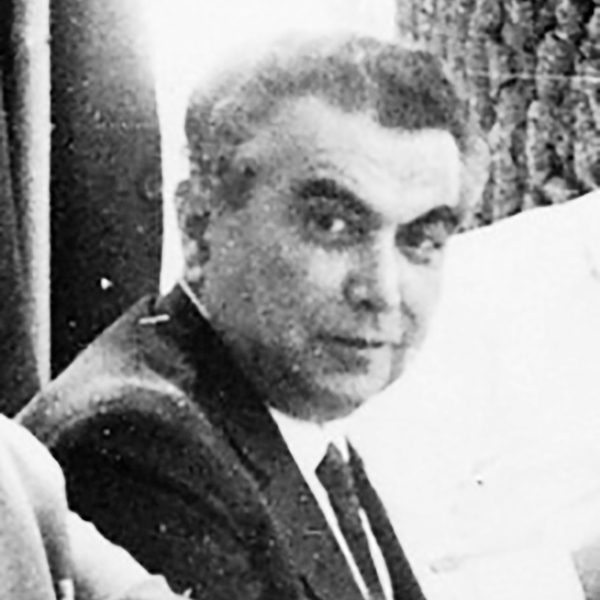
Who was İlhami Demirci? (1908 Istanbul – 1976 Istanbul)
İlhami Demirci is one of the important painters of the Republican era of Turkish painting who, while part of the Impressionist-based development process, managed to break free from this influence and establish his own unique artistic structure. He is particularly known for his Istanbul landscapes, landscapes he created during his travels in Anatolia, and powerful still-life works. The balance he struck between his disciplined approach, based on his academic background, and his free and passionate brushwork constitutes the fundamental character of his art.
His Life and Art Education:
İlhami Demirci was born in Istanbul in 1908. He completed his primary and secondary education at Mercan Sultani High School and his final years at Gelenbevi High School. In 1926, he entered the Sanayi-i Nefise Mekteb-i Âlisi (Academy of Fine Arts), the most important art institution of the time. Here, he studied in the studios of Hikmet Onat and İbrahim Çallı and graduated in 1931. During his academy years, he focused on outdoor painting, light analysis, and color harmony; He was particularly influenced by the Impressionist approach of the Çallı Workshop.
In 1936, the artist went to Berlin, where he worked for two years in the studio of the German painter Max Dungert, and returned home in 1938. This period in Berlin strengthened his understanding of composition and allowed him to come into contact with modern painting trends in Europe.
İlhami Demirci passed away in 1976.
Artistic Perspective:
In his early years, Demirci was seen under the influence of İbrahim Çallı, but he gradually developed his own unique style. While adopting the Impressionist understanding of light and color, his efforts to create a more solid plastic structure stand out in his paintings.
As part of his tours of Turkey, he was sent to Sinop and Mardin; these trips enriched the subject matter of his art. The different geographies, light characteristics, and architectural textures of Anatolia led to new explorations in his palette.
Subjects and Themes;
Istanbul Landscapes
Demirci mainly worked on Istanbul landscapes. The Bosphorus, the Golden Horn, the historical peninsula, and coastal views are the most prominent themes in his art. He conveyed the changing light of Istanbul, its reflections on the water's surface, and the volumetric effect of architectural masses with a sensitive brush technique.
Sinop and Mardin Landscapes
The sea atmosphere of Sinop and the stone architecture of Mardin paved the way for new color and light explorations in the artist's compositional understanding. In these works, the local texture is strongly felt.
Still Life
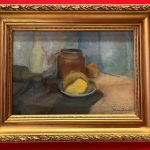
In his still life works, a solid plastic structure is noticeable. The placement of objects, the sense of volume, and the balance of light and shadow are the natural result of his academic discipline.
Stylistic Characteristics;
• Adherence to the color rules of Impressionism
• The exuberant and exciting expression of Realism
• Strong plastic structure
• Free and dynamic brushwork
• Recent romantic influences
While adhering to the rules of Impressionism in his understanding of color, he has given exuberant and exciting examples of Realism. Especially in his later works, he has succeeded in creating a romantic atmosphere with his exciting and relaxed brushwork. In his works from this period, color contrasts became more pronounced, and compositions acquired a more free structure.
His Exhibitions and Place in the Art Scene:
İlhami Demirci was active in the art scene of the Republican era; he participated in various group exhibitions, primarily the State Painting and Sculpture Exhibitions. He was involved in Istanbul-based art circles but was not as well-known as some of his contemporaries. Nevertheless, his works are in private collections and the collections of various art institutions.
İlhami Demirci is among the painters in Republican-era Turkish painting who drew from Impressionist foundations but transformed this influence with individual interpretation. He stood out with his Istanbul landscapes; he expanded his painting repertoire with observations he gained from his travels in Anatolia.
Although not sufficiently well-known, he is a name that should be considered among the important and powerful artists in the history of Turkish painting with his solid plastic structure, light sensitivity, and free brush technique.
-
- İlhami Demirci

-

- İlhami Demirci

-

- İlhami Demirci

-

- İlhami Demirci

-

- İlhami Demirci

-

- İlhami Demirci

-

- İlhami Demirci

-

- İlhami Demirci

-

- İlhami Demirci

-

- İlhami Demirci

-

- İlhami Demirci

-

- İlhami Demirci

-

- İlhami Demirci

-

- İlhami Demirci

-

- İlhami Demirci

-

- İlhami Demirci

-

- İlhami Demirci

-

- İlhami Demirci

-

- İlhami Demirci
