


Who was Neşe Aybey? (March 2, 1930 – January 4, 2015)
Neşe Aybey is considered one of Turkey’s most influential female painters, miniature artists, and academics. She reinterpreted traditional Turkish miniature art with a contemporary visual language, both as an educator, passing on her work to new generations, and through her own creations, securing a significant place in Turkish art history.
Her Life:
Neşe Aybey was born Neşe Duyar in Istanbul in 1930. She became interested in art from a young age and developed her classical education in this direction. She was also known within her family as the older sister of the famous sculptor Gürdal Duyar; this created an environment deeply intertwined with art.
Education and Academic Development:
Aybey received her education at the Istanbul Academy of Fine Arts. In the 1940s, she double-majored in miniature painting and illumination as a student of the renowned teacher Hüseyin Tahirzade Behzat. She combined traditional Turkish arts with modern creative production, learning these two disciplines in depth.
When the Traditional Turkish Handicrafts Directorate and the Traditional Turkish Arts Department reopened in 1976, Neşe Aybey took up a position at the academy as a miniature painting teacher. She also gave miniature painting lessons in various venues, such as the Press Museum, and in private workshops; in this way, she brought classical arts to younger generations.
Her Artistic Production and Language:
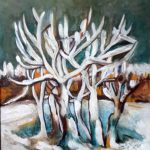
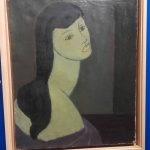
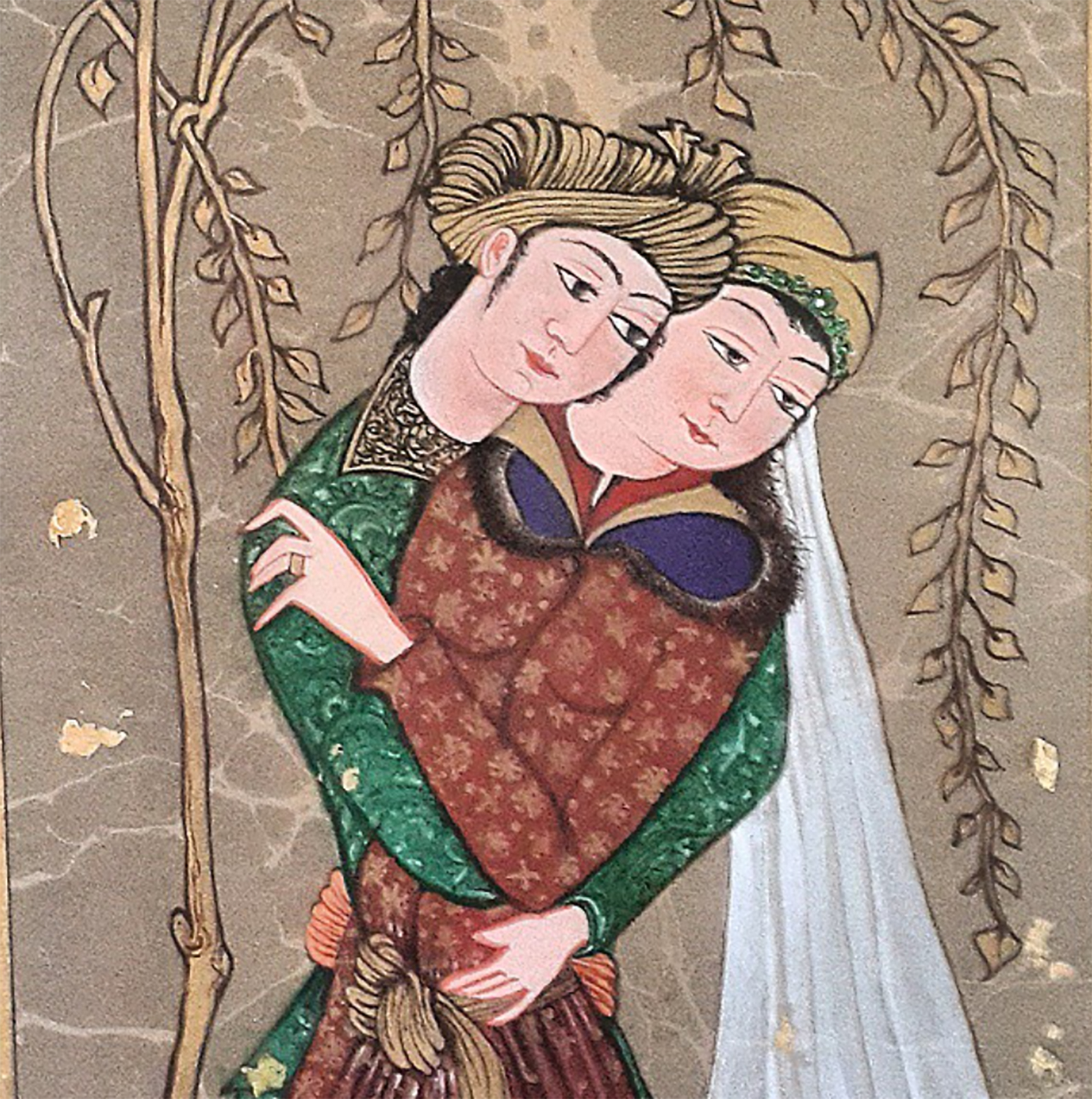
Neşe Aybey’s art holds a strong position, especially in the field of contemporary miniature painting. While combining the traditional understanding of line, pattern, and color with contemporary sensibility, her works skillfully blend elements such as:
• traditional motifs and linear elements,
• modern expression and figurative elements,
• design-design integrity.
In Aybey's works, sometimes the rhetoric of classical miniature painting is preserved; however, the figures, narrative, and use of color transform her from a purely historical artist into a refined visual language that elevates her to the level of contemporary art.
One of her most important works, “Şeküre and Kara” (1999), inspired by Orhan Pamuk’s novel My Name Is Red, combines miniature painting with other disciplines, creating a strong bridge between the artist’s respect for tradition and her innovative interpretation.
Educator Identity and Academic Contributions;
Neşe Aybey was not only a prolific artist but also a teacher and academician who made significant contributions to the Turkish art scene. She pioneered the reintroduction of miniature art into academic programs and ensured its sustainability in the modern era.
While playing a role in nurturing young talents, she became known for her teaching style that combined both classical handicrafts and contemporary painting practice.
Notable Exhibitions;
Neşe Aybey has participated in both individual exhibitions and group events throughout her artistic career:
• Fine Arts Union – Painters Society Istanbul Group Exhibition (1985)
• Those Who Live with Paintings – Alarko Art Gallery (1988)
• Neşe Aybey: Original Miniature and Painting Exhibition – Galeri 3K (1999)
• 90th Anniversary of the Ottoman Painters Society – Istanbul Military Museum (1999–2000)
• Fine Arts Union Exhibitions and Atatürk Cultural Center Events (2004–2008)
• Me, You, Them: The Century of Female Artists – Meşher Exhibition (2021–2022)
— In this latest selection of works, Aybey's gouache painting "The Girl with the Magnolia" was also used in the exhibition's promotional material.
These exhibitions are important milestones where she meets the audience as an artist who defends traditional arts in a contemporary context.
Artistic Vision and Aesthetic Approach;
Aybey's artistic approach seeks a balance between tradition and modernity. Instead of viewing miniature art solely as a classical form, she considered it a "living visual language." With this approach, she developed a narrative that:
• preserves traces of the past
• is open to the expressive methods of contemporary art
• offers a rhythmic flow between figure and pattern.
Aybey's works are also seen as contemporary examples representing the modern face of Turkish miniature art.
Her Last Years;
Neşe Aybey passed away in Istanbul on January 4, 2015. She was buried in Merkezefendi Cemetery.
Her works, academic contributions, and innovative perspective on miniature art continue to be regarded in Turkish art history as a bridge that connects tradition with contemporary aesthetics.
-

- Neşe Aybey

-
- Neşe Aybey

-
- Neşe Aybey

-

- Neşe Aybey

-

- Neşe Aybey

-

- Neşe Aybey

-

- Neşe Aybey
-

- Neşe Aybey

-

- Neşe Aybey

-

- Neşe Aybey

-

- Neşe Aybey

-

- Neşe Aybey

-

- Neşe Aybey

-

- Neşe Aybey

-

- Neşe Aybey

-

- Neşe Aybey

-

- Neşe Aybey

-

- Neşe Aybey
